Which Heater Holds Heat Best: A Comparison of Types

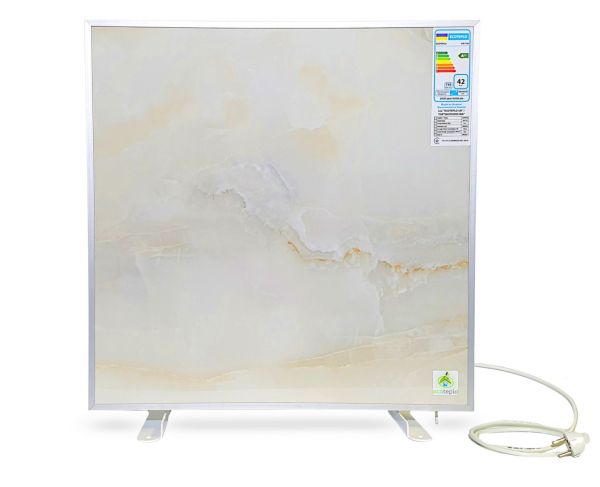
Quick answer: ceramic and infrared heaters hold heat the best — a ceramic element distributes heat evenly across the room, while infrared radiation heats objects and people directly, so the feeling of warmth lasts longer even after the unit is switched off. Convectors and oil radiators fall behind in response speed and heating evenness, especially in large or poorly insulated rooms.
"Which heater holds heat the longest" is one of the most common questions when choosing a heating device, and the answer depends not only on the type of unit but also on how well the room is insulated, its ceiling height, and how often doors or windows are opened. In this article we compare four main types of household heaters by their ability to retain heat and break down which factors actually affect comfort in a room after the unit is switched off.
We'll explain why a direct "power vs. power" comparison is misleading, what to consider before buying beyond just the heating element type, and how to choose a heater without overpaying for specs that don't actually affect heat retention in practice.
Which heater types hold heat best?
Let's compare four common heater types by their operating principle and ability to retain heat in a room after reaching operating temperature.
| Heater type | Operating principle | Heat retention | Response speed |
|---|---|---|---|
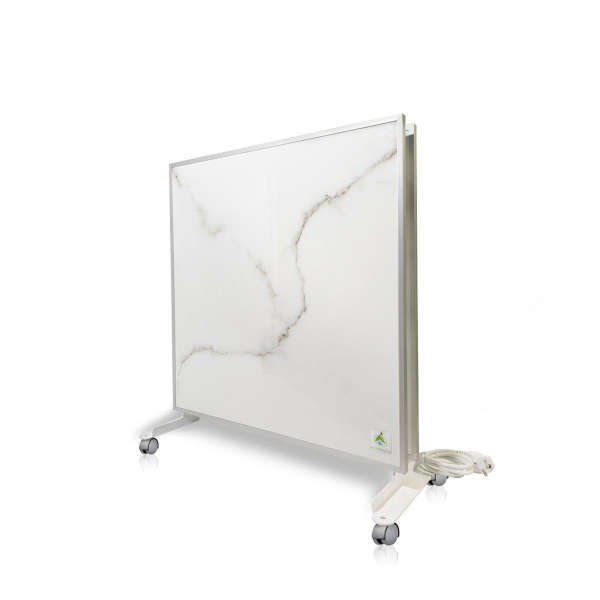
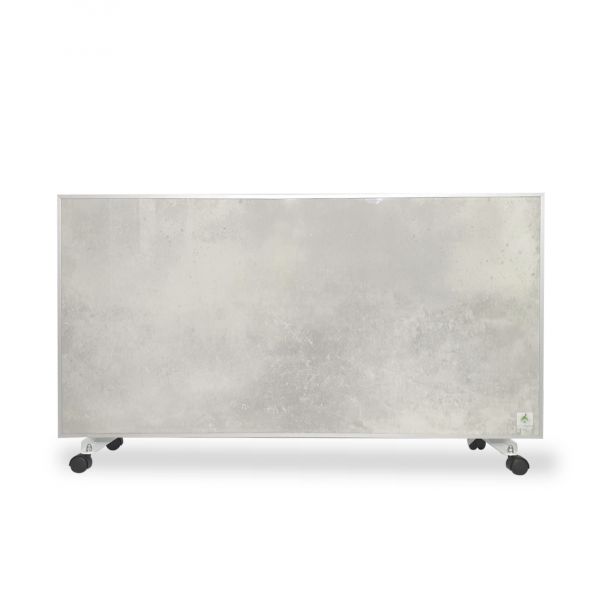
| Ceramic | Heating a ceramic element + convection | High, even distribution with no "hot spots" | Peak in ~20 min |
| Infrared | Radiation, heats objects and people directly | High, warmth is felt longer even after switching off | Instant sense of warmth |
| Convector | Circulation of heated air through vents | Lower — heat escapes faster when a door is opened | Fast air heating |
| Oil radiator | Thermal mass of heated oil inside the housing | Long-lasting due to thermal mass, but slow start | Slow response to temperature changes |
Why do ceramic heaters win on evenness?
Ceramic has high thermal conductivity, so the heater quickly reaches operating temperature and distributes heat evenly across the room. Models with an additional aluminum X-shaped heating element heat the air even more effectively, reducing the temperature difference between floor and ceiling — and it's exactly this difference that most often creates a "hot here, cold there" feeling in a room, where it's already warm near the heater but still cool in a far corner.
Why do infrared heaters hold heat longer after switching off?
Infrared radiation heats not the air, but the objects, walls, and people in the room itself. Since solid surfaces have higher thermal mass than air, they retain accumulated heat longer and continue releasing it into the room even after the unit is switched off — unlike convectors, where warm air is quickly replaced by cold at the slightest draft or when a door is opened.
Do different heater types perform equally well in large rooms?
No. In large, high-ceilinged rooms, the advantage of infrared and ceramic heaters over convectors and oil models becomes even more noticeable, since the latter spend a significant share of their energy heating a volume of air that's constantly changing due to circulation and the natural upward convection of warm air.
Oil and convector heaters: what are their limitations
Oil radiators use the thermal mass of heated oil to retain heat for a long time and have an adjustable thermostat, but they respond more slowly to temperature changes due to the inertia of their design — it can take significantly longer from switch-on to noticeable warmth in the room than with a ceramic panel. Fin convectors heat the air quickly, but their ability to retain heat is noticeably lower than that of ceramic or infrared equivalents, since they work exclusively with air masses that easily lose heat during ventilation or even just through gaps around windows.
What experience shows: what real heat retention depends on
Based on observations of different heater types in everyday use, heat retention depends not only on the type of unit but also on a number of related factors that are often underestimated when choosing:
- Room insulation — even the best heater quickly loses its effect in a room with drafts or uninsulated walls, no matter how much the unit itself costs.
- Room size relative to power — insufficient power forces the unit to run at maximum constantly, with no "reserve" for holding the temperature once a comfortable level is reached.
- Presence of a thermostat — precisely maintaining the set temperature matters more than peak heater power, since it avoids both overheating and temperature dips.
- Ceiling height — in rooms with a high ceiling, convectors and oil heaters lose effectiveness faster than infrared panels aimed at people and objects rather than the entire volume of air.
- Number of exterior walls and windows — corner rooms and rooms with large glazed areas cool faster and need a heater type with better heat retention, not simply more power.
How insulating a room amplifies the effect of choosing the right heater
Even the best heater type can't compensate for serious heat loss in a room. Research and practice show that the leading sources of heat loss in a typical house are old-style windows, insufficiently insulated walls and attics, and gaps around door and window openings.
- Check the condition of the weatherstripping on windows and doors — the cheapest way to significantly reduce heat loss without major renovation.
- Assess the thickness and condition of wall insulation — even 50-100 mm of quality insulation significantly lowers the heater power you need.
- Pay attention to the attic or roof — warm air naturally rises, and a poorly insulated roof can be a major source of heat loss.
- Only after assessing insulation should you finalize the type and power of heater needed for each room.
For more on preparing a house for the heating season, see insulating a house before winter.
The consequences of choosing the wrong heater type
If you choose a convector for a large, poorly insulated room, the unit will spend energy constantly heating air that quickly cools near windows and doors — leading to noticeably higher electricity costs without matching comfort. Conversely, ceramic and infrared heaters are better suited to rooms with challenging insulation, since some of the heat is transferred directly to objects in the room rather than only to the air, which easily leaves the room.
Another consequence of the wrong choice is inflated electricity bills from trying to compensate for poor heat retention by simply increasing the unit's power, instead of switching to a heater type that's structurally better suited to that particular room.
What to look for when choosing a heater
- Heater power matching the room area.
- A thermostat or timer for precise temperature control.
- Compliance with safety standards.
- The room's insulation level.
- Ceiling height and layout features.
- The real use scenario — continuous or periodic heating.
Heat retention and electricity consumption: how they're connected
A heater's ability to hold heat well directly affects electricity bills. If a unit quickly loses accumulated heat after reaching the set temperature, the thermostat has to switch the heating element back on more often, increasing total daily consumption even for units with the same rated power.
That's why, when comparing two heaters of equal power, it's worth looking not just at the spec sheet but also at real user reviews on how long the room stays warm after switching off. A model with a somewhat lower rated power but better heat retention often turns out to be more economical over the season than a more powerful but less efficient equivalent.
A practical test: how to check heat retention at home yourself
You don't have to rely only on manufacturer specs — real heat retention is easy to assess through your own experience over a few days of using the heater:
- Turn on the heater in its normal mode and note the time it takes for the room to reach a comfortable temperature.
- Switch it off and track how many minutes pass before the room temperature noticeably drops — this is the real heat-retention indicator for that specific room.
- Compare how different corners of the room feel: even heat distribution is a sign of a good heater-type choice, while a sharp difference is a signal to reconsider the placement or model.
- Notice how fast the room cools when you open a window to air it out — convectors and oil heaters lose heat noticeably faster than ceramic and infrared equivalents.
Can several heater types be combined in one house?
Yes, and in practice this is often the optimal solution. For example, in a living room with a high ceiling it makes sense to install an infrared heater aimed at the seating area, while in a bedroom or children's room ceramic panels with an electronic thermostat and night mode work better. A combined approach lets you account for each room's specifics individually, instead of searching for a single "universal" solution for the whole house.
The role of insulation quality in choosing between heater types
The heater type that performs best under lab conditions isn't always optimal for a specific house. In a poorly insulated room, even an infrared heater can't compensate for constant heat loss through gaps in windows or uninsulated walls — heat simply escapes outside faster than the unit can retain it.
That's why, before choosing a specific heater type, it's worth assessing the room's actual insulation condition: check how tightly windows and doors seal, and the state of wall and attic insulation. Investing in basic insulation often has a bigger effect on heat retention than switching from one heater type to another without addressing the root cause of heat loss.
Sources and useful links
- Energy efficiency requirements for electric heating appliances — DSTU EN 60335-2-30.
- More on choosing a heater by area: How to choose heater power by area.
- Comparing equipment types: ECOTEPLO vs. infrared heaters and Which is better: a ceramic panel or a ceramic convector.
So, which heater holds heat best? Ceramic and infrared heaters generally win on heating evenness and heat-retention duration compared to convectors and oil models. But the final choice always depends on the specific room — its area, insulation, and use scenario. You can browse the range of Premium Terra ceramic panels and heaters for rooms up to 20 m² in the ECOTEPLO catalog, and read more about common mistakes when choosing a household heater in top mistakes when choosing a household heater.

-
Which heater holds heat better — ceramic or oil?
A ceramic heater reaches operating temperature faster and distributes heat more evenly, while an oil heater retains heat through the thermal mass of the oil but responds more slowly to temperature changes. Overall, ceramic heaters usually win on efficiency.
-
Why do infrared heaters hold heat longer after being switched off?
Infrared radiation heats objects, walls, and people directly, and solid surfaces have higher thermal mass than air, so they continue releasing accumulated heat even after the unit is switched off.
-
Does room insulation affect a heater's heat retention?
Yes, and it is a critical factor: even the most efficient heater quickly loses its effect in a room with drafts or uninsulated walls, so insulation should be assessed alongside choosing the heater type.
-
Why do convectors retain heat worse than ceramic panels?
Convectors work solely through air circulation, which quickly loses heat when doors or windows are opened, while ceramic panels and infrared heaters transfer part of the heat directly to objects in the room.
-
Which heater is best for a room with a high ceiling?
Infrared heaters aimed at people and objects work best in rooms with a high ceiling, since convectors and oil models waste more energy uselessly heating a large volume of air near the ceiling.
-
Can heat retention be judged from a heater's power alone?
No, power only indicates heating speed, not heat-retention ability. More important factors are the heating element type, whether a thermostat is present, and the room's insulation level.
-
Is it worth choosing a heater with a thermostat for better heat retention?
Yes, a thermostat maintains the set temperature precisely without sharp swings, which in practice affects comfort and electricity savings just as much as the heating element type itself.
-
Are oil heaters more economical than ceramic ones?
Not necessarily: oil heaters respond more slowly to temperature changes and can end up costing more due to the long time needed to reach operating temperature, while ceramic panels reach a comfortable temperature faster.
-
Which is better for a child's room — a ceramic or infrared heater?
Both types work, but ceramic panels with a safe surface temperature and tip-over protection are often the preferred choice for children's rooms thanks to even, gentle air heating.
-
Does ceiling height affect the choice of heater type?
Yes, for rooms with a ceiling higher than 3 meters, ceiling-mounted infrared heaters are more effective, while for a standard ceiling height up to 3 meters, wall-mounted ceramic panels or electric radiators are sufficient.
-
How do you check if a heater retains enough heat in a specific room?
Check whether the unit needs to run at full power constantly, or whether the thermostat periodically switches it off to maintain the set temperature — the latter indicates correctly matched power and good heat retention in the room.