Which Radiators to Choose for a Private House: Comparing Types

Quick answer: for a private house, the choice is usually between cast iron, aluminum, and bimetal radiators, as well as electric radiators as a standalone or primary option. Cast iron is durable and long-lasting but heavy and slow to heat; aluminum releases heat quickly but is sensitive to heat-carrier quality; bimetal combines the strength of a steel core with the heat output of an aluminum casing. An electric radiator doesn't depend on a central heating system or the water quality in pipes.
In a private house, unlike an apartment with central heating, the owner is responsible for choosing the heating system and radiator type. This decision lasts 15-25 years, so it's worth understanding real reviews and owners' practical experience rather than just marketing specifications.
Main radiator types for a private house
Cast iron radiators
A classic option with decades of use behind it. Its main advantage is resistance to poor heat-carrier quality and corrosion, which is why cast iron radiators often last 30-50 years. Downsides are heavy weight (one section weighs 5-7 kg) and slow heating and cooling, which makes quick temperature regulation harder.
Aluminum radiators
Lightweight, with high heat output and fast heating thanks to the metal's good thermal conductivity. The main risk is sensitivity to the heat carrier's composition: elevated acidity or oxygen in the water speeds up internal aluminum corrosion, so these radiators are better suited to standalone heating systems with a controlled heat carrier rather than old houses with outdated pipework.
Bimetal radiators
Combine a steel internal channel, resistant to corrosion and pressure fluctuations, with an outer aluminum casing that provides good heat output. This is a compromise option for houses with central or shared heating where heat-carrier quality is unpredictable.
Electric radiators
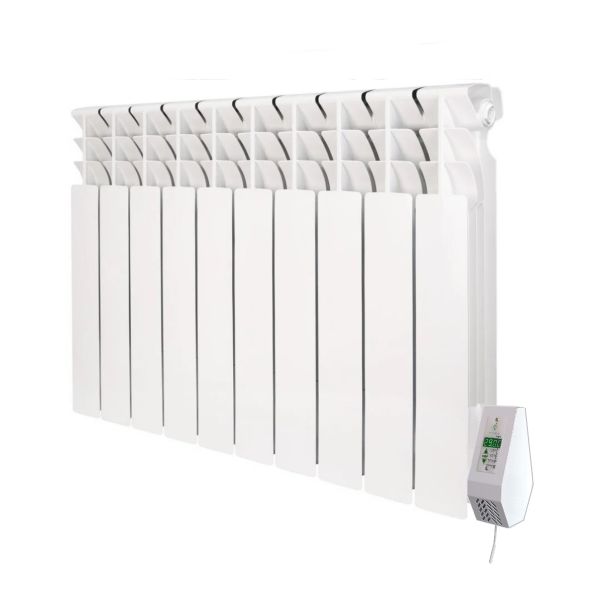
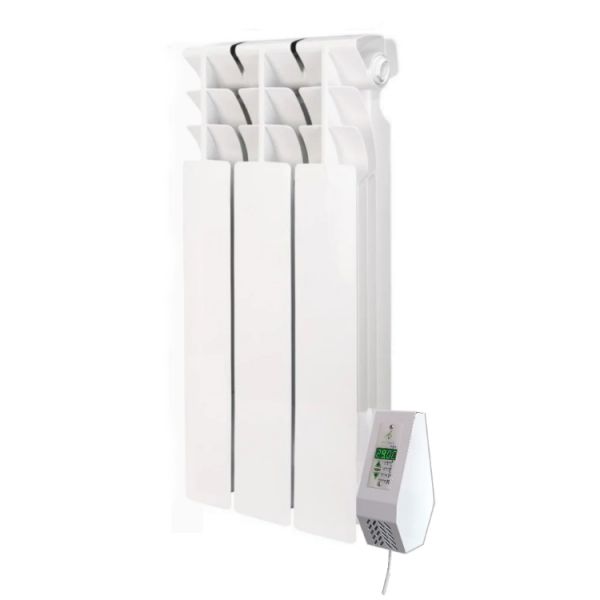
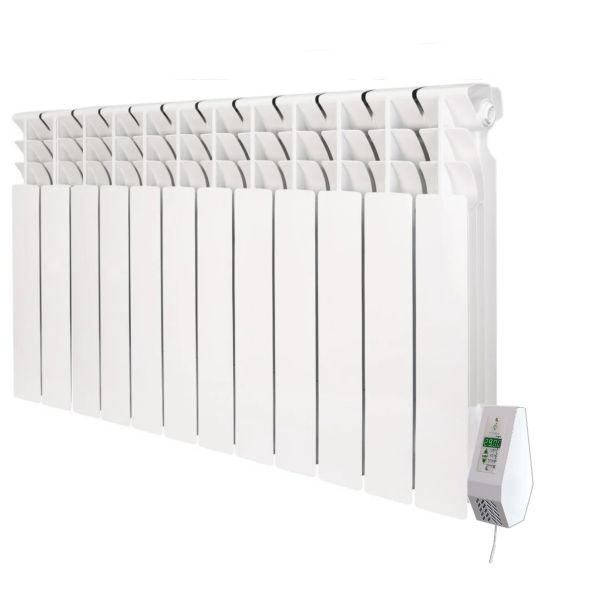
Don't depend on any liquid heating system — each appliance is standalone, plugs into an outlet, and operates independently of other rooms. For a private house, this is especially relevant as backup or primary heating for individual rooms not connected to a central system, or as a full alternative in houses without gas service.
Radiator type comparison table
| Type | Service life | Heating speed | Heat-carrier requirements | Best for |
|---|---|---|---|---|
| Cast iron | 30-50 years | Slow | Undemanding | Old systems with unpredictable heat carrier |
| Aluminum | 15-20 years | Fast | High water-quality requirements | Standalone systems with controlled heat carrier |
| Bimetal | 20-25 years | Fast | Moderate | Universal choice for most houses |
| Electric | 10-15 years (appliance) | Depends on type — fast for panels | Doesn't depend on heat carrier | Standalone heating not tied to a central system |
What private house owners say: summarized experience
Based on the combined experience of private house owners who switched from cast iron to bimetal or electric radiators, the most common reasons for replacement are the slow response of old cast iron radiators to weather changes and the desire for individual temperature control in each room, which is hard to achieve with an old single-loop heating system.
Owners who supplemented their main heating system with electric radiators in individual rooms (guest bedroom, study, attic) note the key practical advantage: the ability to turn on heating only when the room is actually in use, without needing to heat the entire central heating loop for the sake of one room.
A practical takeaway from operating experience: for a house with a stable standalone heating system (own boiler, controlled heat carrier), the optimal choice is bimetal or aluminum radiators. For a house with an unstable or mixed heat source, cast iron radiators or fully standalone electric appliances are more reliable.
When to consider electric heating instead of or alongside radiators
- The house isn't connected to gas, or gasification isn't economically viable for the specific plot;
- Only part of the house needs heating (attic, extension, guest house) without laying a new branch of pipes;
- Construction or renovation is happening in stages, and a full water heating system isn't yet installed;
- Off-grid operation is needed during power outages affecting the main circulation pump — an electric radiator or ceramic panel can be powered from a power bank or generator independently of the pump station.
Practical tips when choosing radiators for a private house
Consider the system pressure
Private houses with a standalone boiler usually have lower operating pressure than multi-story buildings with central heating, so requirements for the radiator's maximum working pressure are less critical, but it's still worth checking the manufacturer's specifications.
Calculate the number of sections for each room
A detailed methodology for calculating power and the number of sections per room area is described in the article "How to Calculate Heating Radiators".
Conclusion
There's no universally "best" radiator for a private house — the choice depends on heating system stability, heat-carrier quality, and budget. Cast iron is reliable for unpredictable conditions, bimetal is a universal compromise, aluminum suits controlled standalone systems, and electric radiators provide full independence from a liquid loop wherever that's needed.
Sources and useful links
- DBN V.2.5-67:2013 "Heating, Ventilation and Air Conditioning"
- Catalog of ECOTEPLO electric radiators

-
Which radiators are best for a private house?
There's no universal answer: cast iron is the most reliable for unpredictable heat carriers, bimetal is a universal compromise, aluminum is the most efficient for controlled standalone systems, and electric is fully independent of any liquid loop.
-
Why are aluminum radiators sensitive to water quality?
Elevated acidity or oxygen in the heat carrier speeds up internal aluminum corrosion, so these radiators are better used in standalone systems with controlled water composition.
-
How long do cast iron radiators last?
With proper use, cast iron radiators can last 30-50 years, significantly longer than aluminum or bimetal equivalents.
-
Can an electric radiator be installed in a private house without gas?
Yes, electric radiators don't depend on gas service and can be used as primary or backup heating in houses without a gas connection.
-
What's better for an attic or extension: a new pipe branch or an electric radiator?
For a standalone room without existing pipework, an electric radiator or ceramic panel is often more practical since it doesn't require laying a new water heating branch.
-
Does system pressure affect radiator choice?
Yes, you need to check the radiator's rated maximum working pressure against the actual pressure in the house's heating system, though standalone systems in private houses usually have lower pressure than centralized ones.
-
Can different radiator types be combined in one house?
Yes, many owners combine a main system of bimetal or cast iron radiators with electric appliances in individual rooms that are used irregularly.
-
How much does replacing radiators in a private house cost?
Cost depends on the number of sections, radiator type, and installation complexity; electric radiators usually don't require dismantling the existing pipe system, which lowers overall installation costs.
-
Is a control unit needed for an electric radiator?
Yes, a heating-element control unit regulates the heat carrier's temperature inside the appliance and ensures stable operation; see the control units category for more.
-
Which radiators heat up fastest?
Aluminum and bimetal radiators heat up faster than cast iron thanks to the metal's better thermal conductivity, and electric panel appliances can reach working temperature even faster.