Saving on Electric Heating: The Svitlovodsk Experience

Quick answer: residents of Svitlovodsk and Kremenchuk save on electric heating through three things: correctly sizing heater power for the specific area (without a "just in case" margin), using a thermostat instead of manual control, and zonal heating — where only the room currently occupied is heated, not the whole apartment at once.
Svitlovodsk and Kremenchuk are cities where the question of alternative heating is especially pressing due to the specifics of local infrastructure and residents' recurring questions about the quality of district heating. Over recent seasons, these cities in particular have seen a notable rise in demand for autonomous electric heating.
This material offers a practical breakdown based on real scenarios from local residents: how much the switch costs, how to make it economical, and which mistakes to avoid.
Regional context: why these cities are representative
Svitlovodsk and Kremenchuk are worth looking at not because of any unique specifics, but on the contrary — because they're typical of medium and small Ukrainian cities: panel and brick construction from the 1970s-1990s, a mixed range of heating systems (from central to autonomous gas), and an active shift by some residents toward electric heating over the past several heating seasons. These cities' experience illustrates well the processes happening across the country in cities of similar scale.
Why are residents of Svitlovodsk and Kremenchuk switching to electric heating?
- Unstable central heating in certain buildings and neighborhoods.
- The wish to control the temperature themselves, rather than depend on the heat supplier's schedule.
- The need for a backup option in case of network failures or planned outages.
- Ease of installation — ceramic panels don't require major renovation or approvals, unlike gas heating.
How to account for seasonal tariff fluctuations when planning a budget
When planning a switch to electric heating, it's worth budgeting not just for the equipment but also for possible changes in electricity tariffs during the heating season — they're revised regularly, and relying on last season's prices without adjusting for current trends would be a mistake. A practical tip from experienced users is to build in a 15-20% margin on top of the estimated heating-season budget, so a tariff change or a colder-than-expected winter doesn't come as an unpleasant surprise.
How much does switching to electric heating actually cost?
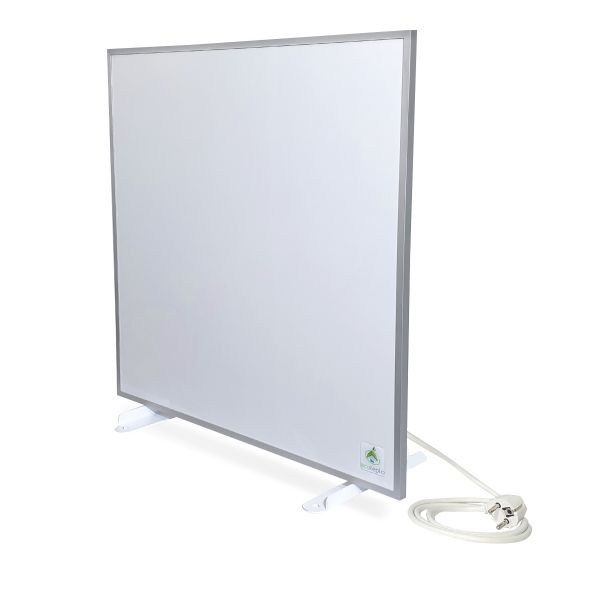
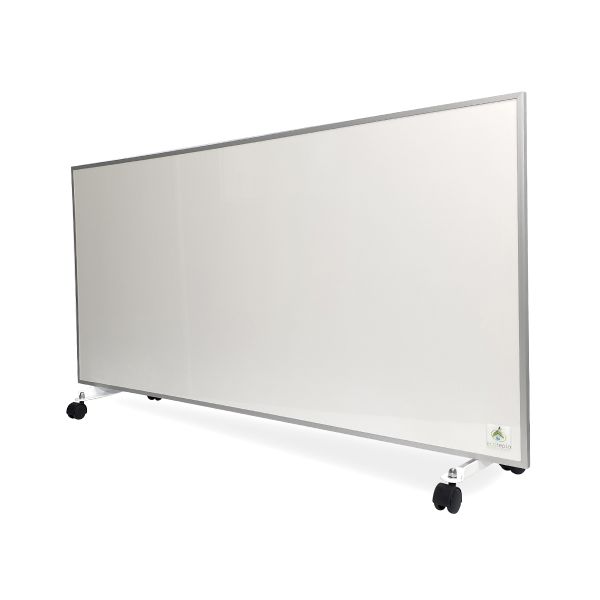
A rough calculation for a 50-60 m² apartment (a typical two-room apartment) looks like this: you need 2-3 ceramic panels with total power matched to each room's area, not the apartment as a whole. The main mistake beginners make is buying one powerful unit "for the whole apartment" instead of several smaller ones with individual control per room.
| Room area | Approximate heater category | Usage mode for savings |
|---|---|---|
| Up to 10 m² (bedroom, kids' room) | Heaters up to 10 m² | Thermostat at 18-20°C, zonal heating |
| Up to 18-20 m² (living room) | Heaters up to 20 m² | Primary heating during evening hours |
| Up to 30 m² (large room) | Heaters up to 30 m² | Combined with additional insulation |
The role of the local Dnipro-region climate in choosing a heater
Climatically, Svitlovodsk and Kremenchuk sit in a zone with moderately cold winters, without the extreme frosts typical of the northeastern regions. This means that for most apartments, medium-power heaters calculated using the standard formula (roughly 100 W per m², assuming standard ceiling height and adequate insulation) are enough, without a significant "just in case" power margin that only increases electricity use with no real need.
How to specifically save on electric heating: practical steps
- Calculate the needed power for each room separately, not roughly for the whole apartment — this gives a more accurate and usually cheaper result.
- Choose models with a thermostat. A unit running constantly at maximum without automatic shutoff is the main source of overspending.
- Heat zonally. Turn on the unit in the room currently occupied, not the whole apartment at once.
- Consider registering for the preferential night tariff if your power company offers it — more details in the material on registering electric heating in Ukraine.
- Insulate windows and doors before the season — without this, even the most economical heater will end up compensating for draughts.
Is it worth looking at neighboring regions' experience
Experience switching to autonomous electric heating in cities of similar climate and building type in the Poltava and Kirovohrad regions generally confirms the same patterns: zonal heating, correctly sizing power per room, and a thermostat give the biggest practical effect regardless of the specific town. Regional specifics mainly affect the terms of the preferential tariff and the availability of service support, not the basic savings principles.
What local residents' experience shows
According to local buyers, the most common scenario is a gradual switch: first installing one panel in the bedroom or kids' room, assessing actual monthly costs, and only then expanding to the rest of the rooms. This approach lets you adjust the power calculation based on your own experience, without spending a large sum on equipment for the whole apartment right away.
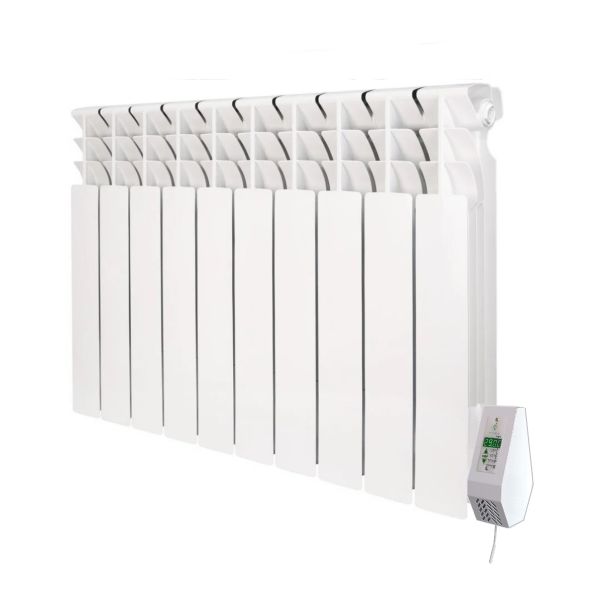
A second practical takeaway from local experience: private house owners in Svitlovodsk and Kremenchuk more often combine ceramic panels with a heating-element control unit for existing radiators — this lets them use the already-installed heating system as a backup, without spending money on removing old radiators.
What to check before buying equipment specifically in Svitlovodsk or Kremenchuk
- The current conditions for the preferential tariff from your power company, specifically for your district.
- The condition of the building's wiring, especially if it was built before the 1990s.
- Whether delivery and service support are available for the chosen heater model in your city.
- The actual area and number of exterior walls in each room, for an accurate power calculation.
Why zonal heating is more economical mathematically
Heating the whole apartment at once means energy is spent maintaining the temperature in every room regardless of whether anyone is there. A zonal approach — actively heating only the room currently occupied — reduces the total load on the power grid and, correspondingly, the electricity bill, since empty rooms can be kept at a lower background temperature.
Is it worth consulting local suppliers before buying
Yes, this is worth doing regardless of whether you buy equipment online or at a local store. A consultation helps account for delivery nuances to your city, the availability of nearby service support, and warranty repair timeframes if needed. This is especially relevant for residents of Svitlovodsk and Kremenchuk, since delivery and service logistics can differ compared to larger regional centers.
Comparison of heating options for the region
| Heating option | Dependence on city infrastructure | Control flexibility |
|---|---|---|
| Central heating | Fully dependent on the heat supplier | No individual control |
| Gas boiler | Depends on gas supply and network pressure | Medium, requires maintenance |
| ECOTEPLO ceramic panels | Only needs a power supply | Full individual control per room |
Is it worth having a portable power bank for critical appliances
For basic comfort during short outages (a few hours), a compact power station can keep lighting, a router, and phone charging running, though fully powering a strong heater usually requires much more powerful and expensive equipment. For most households in the region, it's more rational to invest first in insulation and zonal heating, and to consider backup power for the heating itself as a separate question, weighing the cost against the actual need.
How to act during power outages when you have electric heating?
The question of flexibility during power outage schedules is just as relevant for Svitlovodsk and Kremenchuk as for the rest of the country. A practical approach is to be able to quickly shift heating to whichever room currently has power (in turn, on a schedule), instead of trying to heat everything at once. Owners who planned outlet placement and the number of units in advance for specific outage scenarios adapt to the schedules most easily. More on this in the material on power outage schedules and choosing a heater that can handle the load.
Typical mistakes local buyers make at the start
- Buying a heater "by eye," without calculating the room's area. This is the most common cause of disappointment — the unit either can't keep up with heating or wastes extra electricity.
- Putting off window insulation "for later." Without it, even a correctly chosen heater will work less efficiently.
- Ignoring the preferential tariff option. Many simply don't know they can officially register electric heating and pay less for night consumption.
What local demand figures show
Based on overall demand trends for autonomous electric heating in small and medium cities of central Ukraine, medium-power models for 10-20 m² rooms remain the most sought-after — this format best matches the region's typical planned housing (two- and three-room apartments with rooms of corresponding size). This confirms the general practical recommendation: calculate power per room separately rather than relying on average figures for the whole apartment.
Is there a difference between heating an apartment and a private house in the region?
Yes, and the main difference is the area and number of exterior walls. A private house usually has a larger exterior surface area per square meter of living space compared to an apartment in a multi-story building, so heat loss is higher, and insulating the walls and roof plays an even bigger role than in an apartment. Private house owners in Svitlovodsk and Kremenchuk who complain about high costs after switching to electric heating most often have an insufficient insulation problem, rather than electric heating itself being unsuitable.
A practical calculation example for a two-room apartment
Let's take a hypothetical 52 m² apartment: a 12 m² bedroom, an 18 m² living room, an 8 m² kitchen, with a hallway and bathroom making up the rest. The optimal approach: one panel from the up-to-10 m² category in the bedroom, one from the up-to-20 m² category in the living room, and a compact unit for the kitchen if needed. This distribution lets you turn on only the part of the apartment actively used at a given time of day, instead of maintaining the same temperature across the whole area around the clock.
Why neighboring households' experience is worth attention
In small and medium cities, where social ties between neighbors are closer than in big cities, practical experience spreads quickly: owners who successfully switched to electric heating and are satisfied with the result often become a source of advice for neighbors. This shows up in the pattern of inquiries too — after one successful example in a building entrance or on a street, the number of requests from the same address or area noticeably rises over the following months.
A quick summary for residents of the region
The main practical takeaway for Svitlovodsk, Kremenchuk, and similar cities: switching to electric heating should start with an honest per-room power calculation, not with a search for the cheapest unit on the market. A staged switch — one or two rooms first, assessing actual monthly costs, and only then expanding to the rest of the apartment or house — gives the most predictable and financially safe result, confirmed by local households' experience over recent seasons.
A dual-zone meter as the first step toward savings
Before calculating regional savings, it's worth establishing a basic condition: without a dual-zone (day/night) meter, the preferential electric heating tariff is applied to the entire consumption volume at a single rate, and part of the potential savings is lost. A dual-zone meter records consumption separately for the daytime interval (7:00-23:00) and nighttime (23:00-7:00), and a reduced rate applies during the night period — roughly half the daytime rate. For a household with a stable nighttime load (storage heaters, a boiler, appliance charging, laundry), switching to dual-zone metering and shifting part of consumption to nighttime hours is the portion of savings in Svitlovodsk that doesn't depend on the heater brand, only on consumption discipline.
Sources and useful links
General recommendations for energy-efficient heating of residential spaces are contained in DBN V.2.5-67:2013 "Heating, Ventilation and Air Conditioning." For the current range and prices of models to calculate your own switching budget, see the ECOTEPLO ceramic heaters section, and for a general approach to saving electricity in winter, see the material on 15 practical tips for saving electricity.
Switching to electric heating in Svitlovodsk and Kremenchuk is primarily a matter of correct calculation, not a search for the "cheapest" unit. A staged switch, zonal heating, and a thermostat deliver the greatest practical savings effect, confirmed by local residents' experience over recent heating seasons.

-
How much does it cost to switch a 50 m² apartment to electric heating?
Roughly 2-3 ceramic panels of appropriate power are needed, one per room — the exact amount depends on the models chosen and the apartment's insulation level.
-
Why shouldn't you buy one powerful heater for the whole apartment?
It is less economical than several smaller units with individual control per room, since that approach lets you heat only the rooms currently occupied.
-
Can electric heating be combined with old radiators?
Yes, using a heating-element control unit, an existing radiator can be turned into an electric heater and used as a backup heat source.
-
What is more cost-effective — heating the whole apartment or room by room?
Zonal heating by room is more economical, since energy is spent only on the space where people actually are, not the entire area at once.
-
Is switching to electric heating relevant for a private house in the region?
Yes, many private house owners in Svitlovodsk and Kremenchuk already combine electric panels with their existing heating systems for greater reliability.
-
What is the best way to start a gradual switch to electric heating?
It is best to start with one room (for example, the bedroom), assess the actual monthly costs, and only then expand the number of units to the other rooms.
-
Can you get the preferential electric heating tariff in Svitlovodsk?
Yes, provided a dual-zone meter is installed and electric heating status is officially registered with the local power company — more details in the material on registering electric heating in Ukraine.
-
Is there a difference in choosing heaters for Svitlovodsk versus big cities?
The principles of power calculation are the same across Ukraine — the only difference lies in local tariff specifics and the stability of central heating, which are worth assessing individually.