Two-Zone Electricity Meter in 2026: Is It Worth Installing During Power Outages

Quick answer: a two-zone meter pays off for households that consistently use a lot of electricity at night (electric heating, a boiler, charging equipment) and have power during night hours according to their outage schedule. The device and installation cost from UAH 2,500-4,000, with a typical payback of 1-3 years. If the outage schedule regularly cuts night hours, the benefit drops, and it's worth calculating for your specific region.
In 2026, the question of a two-zone meter is no longer as clear-cut as it was a few years ago. In the past, the math was simple: electricity is 50% cheaper at night, so anyone with electric heating or a boiler saved money. Today a new factor has entered the equation — rolling blackout schedules, which in many regions unpredictably affect exactly the night and evening hours. So before paying for installation, it's worth calculating your specific case.
How does the night tariff work and who needs it?
Ukraine has a differentiated tariff: during the day electricity costs the regular rate, while during the night period (traditionally 11 PM to 7 AM, with exact boundaries set by the supplier) it comes with a discount of about 50%. A single-zone meter physically cannot distinguish when exactly electricity was consumed, so billing always follows the daytime tariff.
A two-zone (and sometimes three-zone) meter records consumption separately by time-of-day zone and automatically applies different tariffs. The difference in your bill is noticeable only when a significant share of consumption actually falls within night hours.
Who actually benefits?
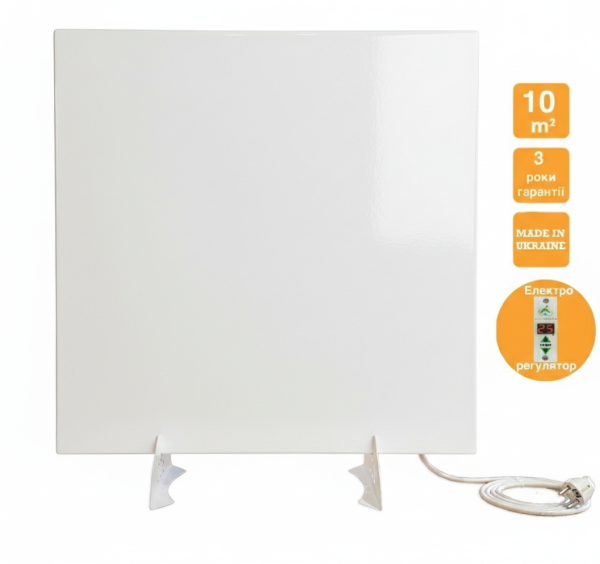
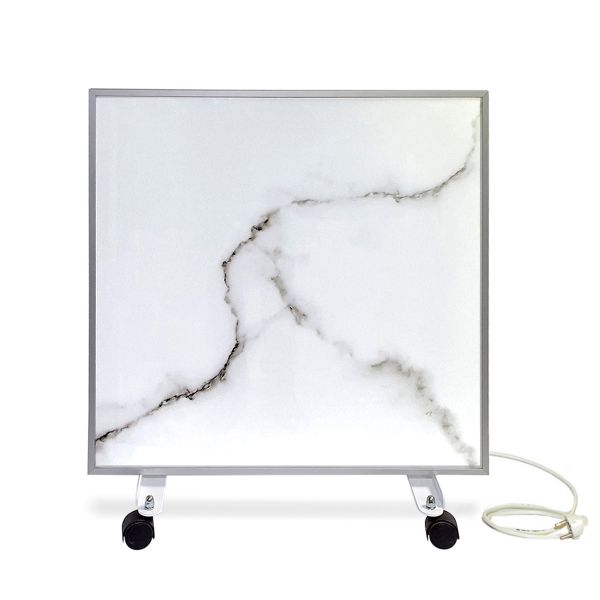
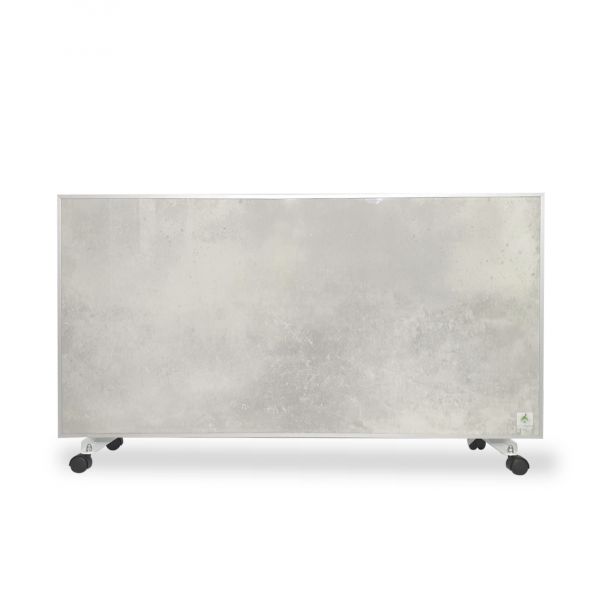
- Owners of electric heating (including ECOTEPLO ceramic heaters) who keep devices running at night to maintain temperature.
- Those who run a boiler, washing machine, or dishwasher on a night timer.
- Private-house households where a pump station or water heating system runs at night.
- People who charge an electric vehicle or batteries overnight.
If, on the other hand, little is consumed at night in the apartment (everyone's asleep, appliances are off), the night tariff won't make weather — the installation cost simply won't pay for itself.
How much does installation cost in 2026?
The price consists of two parts: the device itself and the connection work. A programmable two-zone meter starts at roughly UAH 2,500-3,000, and together with electrician's work and registration with the regional grid operator (oblenergo) the total comes to UAH 3,500-4,500, depending on the region and type of housing (apartment or private house).
| Stage | What it includes | Approximate cost, UAH |
|---|---|---|
| Metering device | Two-zone meter purchased from a specialized store | 2,500-3,500 |
| Programming | Setting up metering zones and a programming certificate | 200-500 |
| Installation | Meter replacement by a licensed electrician | 500-1,000 |
| Registration | Application to the grid operator, commissioning certificate | 0-300 |
How does the procedure itself work?
- Submit an application for two-zone metering to your electricity supply company (online account or office).
- Purchase a certified metering device — preferably from a specialized store that offers programming.
- Arrange a visit from a licensed electrician to replace the meter in compliance with safety rules.
- Receive a commissioning certificate and confirm that your account has been switched to the two-zone tariff.
How much does a kWh cost at night in 2026 right now?
Under the current tariff for households (UAH 4.32 per kWh, fixed by the government through October 31, 2026), the night rate with a 50% discount is approximately UAH 2.16 per kWh. The difference is noticeable only with stable night-time consumption — always check the exact rate and tariff review dates in your grid operator's online account, since the government may extend or change the price fixing.
Can a meter be installed for free?
Some distribution system operators publish annual investment programs under which two-zone meters are installed free of charge for certain addresses — before buying a device yourself, it's worth checking whether your address is on such a list on your grid operator's website. This can save the full cost of the device and installation. You may not tamper with the meter yourself, break seals, or replace the device without coordinating with the operator — metering must be officially re-registered.
Do outage schedules affect payback?
This is the main thing that has changed compared to previous years. If the outage schedule for your queue regularly covers night hours (for example, a stable outage from 00:00 to 04:00), the actual number of hours during which you can take advantage of the preferential tariff shrinks. That doesn't make the device useless — it simply means the benefit is measured not by "a theoretical 8 hours at night," but by the actual number of hours with power in your schedule.
Practical takeaway: before installing a two-zone meter in 2026, compare your queue's outage schedule with the boundaries of the night tariff zone. If the overlap is less than half of the night period, recalculate the payback with caution.
What experience shows
According to service teams that install ECOTEPLO electric heating in private homes, households with 1,000-1,500 W ceramic panels running at night to maintain 18-20°C save enough on the tariff difference each month to cover the cost of the meter in 8-14 months — provided the night power supply is stable. In apartments with low night-time consumption (no electric heating), this period stretches to 3-5 years, and the value of installation should be weighed separately.
Another practical nuance: owners of heaters with a built-in thermostat and timer (for example, ECOTEPLO models with electronic control) can make the most of the night tariff by programming the device to increase output precisely during preferential hours and switch to an economy mode during the day — this amplifies the effect of two-zone metering rather than replacing it.
Alternatives and additional savings
A two-zone meter isn't the only way to lower your heating bill. It's worth considering alongside other steps:
- Insulating the space and eliminating drafts — reduces the actual need for heating power.
- Heaters with a thermostat and timer instead of devices without regulation — why you need a thermostat and how to choose one.
- Zone heating instead of warming the entire apartment at once.
- Accessories for more precise control — do you need heater accessories.
For more on 15 practical winter savings steps, see the article how to save electricity in winter. And for how to plan heating around outage schedules, see power outage schedules: how to choose a heater.
Sources and useful links
The procedure for differentiated tariffs and requirements for metering devices are governed by the Distribution Systems Code and the Rules of the Retail Electricity Market of Ukraine, as well as your electricity supplier's individual terms. Check the exact night zone boundaries and tariff with your grid operator. For heating equipment selection, see the ECOTEPLO ceramic heaters catalog.
To sum up: a two-zone meter in 2026 remains a savings tool, but it's no longer an automatic "yes" for everyone. Calculate your own night-time consumption, compare it to the actual outage schedule for your queue — and only then decide on installation.

-
How much does it cost to install a two-zone meter in 2026?
Approximately UAH 3,500-4,500 including the device, programming, and electrician's work, depending on the region and type of housing.
-
How long does a two-zone meter take to pay for itself?
With stable electric heating at night — 8 to 14 months. With low night-time consumption, payback can stretch to several years.
-
What hours does the night tariff apply?
Usually from 11 PM to 7 AM, but the exact boundaries are set by your specific electricity supplier — check your contract or online account.
-
Is it worth installing a meter if power is often cut at night?
The benefit decreases in proportion to how many hours of the night zone are actually covered by the outage schedule. Calculate the real number of hours with power at night before installing.
-
Can a three-zone meter be installed instead of a two-zone one?
Yes, some suppliers offer three-zone metering (peak, off-peak, night), which gives an even more precise tariff breakdown but also a more complex setup.
-
Who is allowed to install a two-zone meter?
Replacement is carried out by a licensed electrician based on an application submitted to the grid operator; unauthorized replacement is prohibited.
-
Is a different device needed for a private house versus an apartment?
Technically it's the same device; only the installation location differs — usually on the facade or in the utility panel for a house, and in place of the old meter for an apartment.
-
Does a two-zone meter save money by itself?
No, it only records consumption by time-of-day zone. The savings come from actually shifting consumption (heating, boiler, appliances) to night hours.
-
What's more beneficial for electric heating — a two-zone meter or a heater with a thermostat?
These aren't alternatives but complements: a thermostat saves through more precise temperature control, while a two-zone meter saves through cheaper night-time kWh. Together the effects add up.
-
Does the discount apply to all electricity at night or only part of it?
The reduced tariff applies to the entire volume of electricity consumed within the night metering zone, with no limit on the number of kWh.