Heating-Element Control Unit: Why a Radiator Needs One

Quick answer: a heating-element control unit is an electric heating element with a thermostat built into a radiator, which turns an ordinary radiator (oil-filled, aluminum, or cast iron) into a standalone electric heater independent of central heating or a boiler. It makes sense when you need a backup heat source in case of a gas outage or network failure, or when you want to control heating in a specific room independently of the others.
The quality of central heating and gas supply in Ukraine has raised more and more questions in recent years, which is why owners of private houses and apartments are looking for ways to have a "plan B." One such solution is a heating-element control unit, which turns an ordinary radiator into a full electric heater.
Let's look at how it works, whether it's genuinely needed, and what to look for when choosing one.
Why interest in this solution is growing right now
Just a few years ago, a heating-element control unit was considered a niche solution for country cottages without central heating. The situation has changed due to a combination of factors: unstable gas supply, rising costs of alternative fuels, and a general desire to have a "plan B" in case of failures in utility infrastructure. Private house owners increasingly see this solution not as exotic but as a practical way to insure against disruptions without spending a lot of money on a completely new heating system.
What is a heating-element control unit?
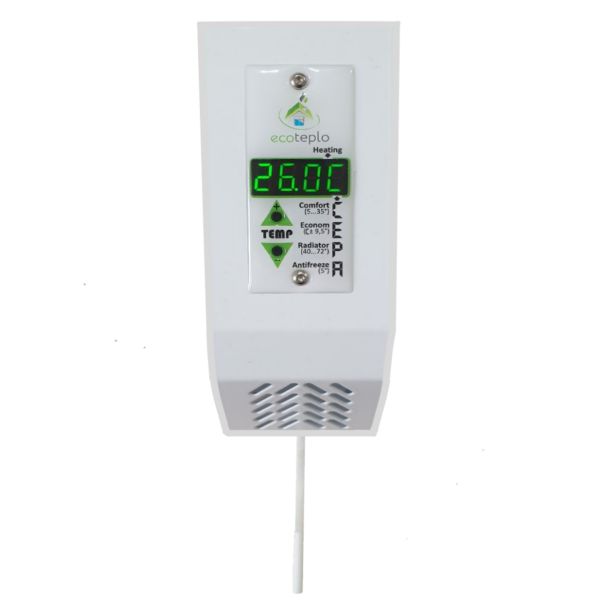
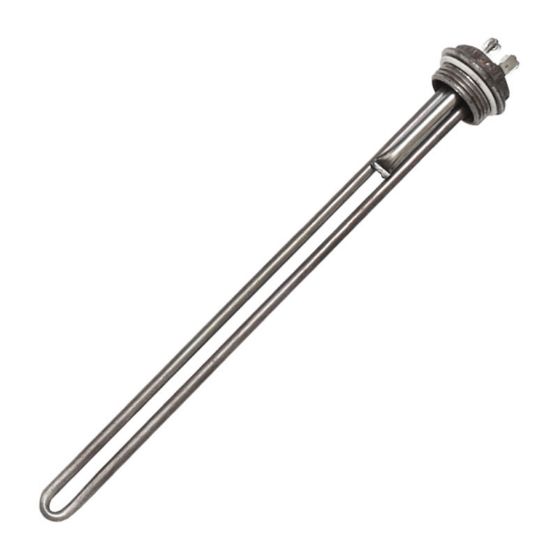
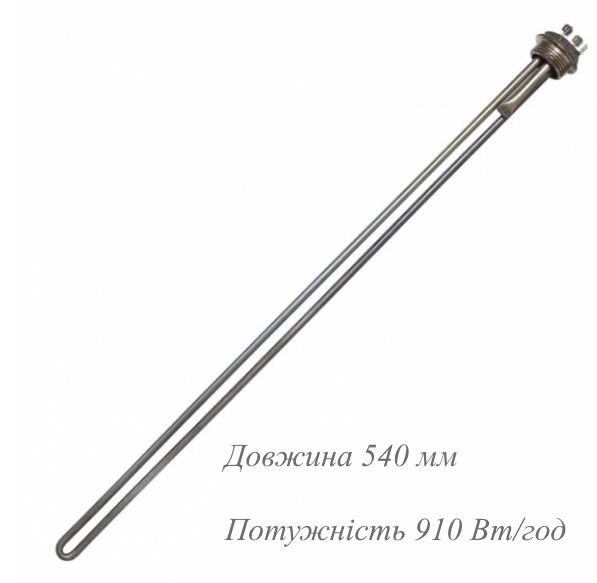
It's a compact assembly that screws into a radiator in place of a blanking plug or valve and contains a tubular electric heating element together with an electronic or mechanical thermostat. The radiator, filled with a heat-transfer fluid (a special liquid or water), heats up from the element the same way it would from a central heating system, but it's powered from an ordinary outlet.
Why do you need a heating-element control unit?
- Backup heating. For gas outages, district heating network failures, or poor central heating quality.
- Autonomous heating of individual rooms. You can turn on heating only in the rooms currently occupied, without wasting energy on empty ones.
- Using existing radiators. No need to buy a new heater — the old radiator gets a second life as an electric appliance.
- Flexibility during power and gas outages. Combined with a backup power source, it lets you maneuver between available resources.
Comparison with other heating backup methods
Besides a heating-element control unit, private house owners also consider other backup options: a generator to power the entire heating system during outages, a solid-fuel boiler as a second circuit, or portable propane heaters. Each option has its own pros and cons in terms of cost, ease of use, and autonomy. A heating-element control unit wins primarily on simplicity — no need to buy a separate appliance or deal with fuel, just an existing electrical network and an already-installed radiator.
What advantages does a thermostat give in a control unit?
The main difference between a quality control unit and a simple element without electronics is precise temperature control. The thermostat switches heating off once the heat-transfer fluid reaches the set temperature and switches it back on as it cools, maintaining a stable level without manual control and without wasting electricity by constantly running at maximum.
| Type of control unit | Temperature control | Cost-efficiency | Convenience |
|---|---|---|---|
| Simple element without a thermostat | None, on/off only | Low — easy to overheat or underheat | Simplest installation |
| Unit with a mechanical thermostat | Stepped control | Medium | Simple adjustment by turning the dial |
| Unit with an electronic thermostat | Precise, maintains the set temperature | Highest | Mode programming, sometimes phone control |
Operating safety: what deserves special attention
- Never switch on the control unit without heat-transfer fluid in the radiator — this can cause overheating and failure of the heating element.
- Don't use homemade or uncertified control units — electrical safety is critical for a product with a heating element submerged in liquid.
- Check that the RCD on the line is working properly, since the unit operates in contact with liquid.
- Regularly inspect the radiator for leaks at the connection point with the control unit.
How to choose a control unit for your radiator?
Does every radiator suit installing a heating element?
No, it's important to account for the radiator type and the volume of heat-transfer fluid it holds — the element's power must match the radiator's volume and type (aluminum, cast iron, bimetal), otherwise heating will be inefficient or, conversely, excessive.
What power should you aim for?
A rough power calculation is built the same way as for ordinary electric heaters — based on the area of the room served by the specific radiator. A detailed approach is described in the material on how to calculate radiator heating.
What actual use shows
Based on private house owners' experience, the most common use scenario for a heating-element control unit isn't continuous operation but specifically a backup mode: when gas disappears or its price rises, or when central heating clearly can't cope with the cold. In this mode, the control unit pays off primarily not through direct savings but through insurance against the cold at a critical moment.
A second practical takeaway: owners who installed units with an electronic thermostat rather than the simplest mechanics report noticeably lower electricity consumption compared to those who manage heating manually "by eye."
Do you need to drain the heat-transfer fluid for summer
If the control unit isn't used in summer, there's usually no need to specifically drain the fluid — the radiator simply stays filled and ready to work at any moment. The exception is prolonged idle periods in an unheated room at risk of freezing (for example, a country house in winter with no heating at all), where the fluid should either be drained or replaced with a non-freezing liquid recommended by the manufacturer.
Why this works technically
A radiator with a control unit works on the same physical principle as an ordinary central heating radiator: hot fluid inside the radiator's sections heats the metal casing, which in turn gives off heat to the room through convection and partly radiation. The only difference is the source of the fluid's heating — instead of a boiler plant, it's an electric heating element directly inside the radiator itself, so there's practically no heat loss on the way to the room, unlike with long district heating networks.
Can a control unit be installed yourself without a plumber
With basic plumbing skills and following the manufacturer's instructions, self-installation is quite feasible, especially if the radiator is already removed (for example, during a renovation). That said, for more complex heating systems or if you're unsure of your own skills, it's better to contact a specialist — an installation mistake can lead to a fluid leak or, in the worst case, damage to the element's electrical components.
Installing a control unit: what to know in advance
- The radiator needs to be removed, or at least partially drained, before installing the unit in place of the standard blanking plug.
- Check the threading and fitting — different radiator manufacturers may have differences in thread standards.
- Fill the radiator with the appropriate heat-transfer fluid recommended by the control unit's manufacturer — using an unsuitable liquid can shorten the element's service life.
- Check the connection's seal before the first startup to avoid a fluid leak.
- Connect the unit to a working outlet rated for the appropriate load — just like any powerful electrical appliance.
The installation's complexity usually doesn't require skills beyond a basic understanding of plumbing, but without experience it's better to bring in a technician, especially when several radiators in a private house are involved at once.
Comparing the cost of ownership over several years
If you compare not just the initial purchase price but the total costs over 5-7 years of use (electricity, possible maintenance, likelihood of failure), a heating-element control unit built on an existing radiator usually wins compared to buying a completely new heating appliance of the same power, precisely because there's no cost for a new casing and the radiator's own construction, which is already in place.
Can several radiators be controlled centrally?
Yes, for private houses with several radiators there are solutions for unified control — where one central control unit coordinates several heating elements in different radiators, maintaining the set temperature in each room separately or according to an overall scenario. This is more convenient than controlling each radiator manually, especially for an entire house.
Can you go back to a regular radiator after removing the unit
Yes, if needed the control unit can be removed and the radiator's standard blanking plug or valve reinstalled, restoring its operation within the central heating system. This makes the solution reversible and reduces the risk for those who are hesitant — upgrading a radiator can be treated as a one-season experiment rather than an irreversible decision.
Comparison: a heating-element control unit or a separate electric heater?
| Criterion | Heating-element control unit (existing radiator) | Separate ECOTEPLO ceramic heater |
|---|---|---|
| Using existing equipment | Yes, upgrading an existing radiator | No, a new unit is needed |
| Room heating speed | Slower due to the fluid's thermal inertia | Faster thanks to direct radiation |
| Mobility | Fixed, tied to the radiator | Can easily be moved to another room |
| Typical use scenario | Backup heating during outages or gas cuts | Primary or supplementary heating for a specific room |
A quick summary for those considering backup heating
A heating-element control unit isn't a replacement for a full heating system, but a practical way to insure against disruptions using an existing radiator. The main selection criteria are power matched to the radiator's volume, an electronic thermostat for precision and savings, and manufacturer certification for safe operation in contact with liquid. For most private houses, this is a more affordable and simpler solution than fully replacing the heating system or buying a separate generator.
How much does maintaining a heating-element control unit cost?
Compared to maintaining a gas boiler (annual inspection, cleaning, possible automation repairs), a heating-element control unit needs practically no regular maintenance — the main thing is to check the fluid's condition and the connections' seal once a season. This is another practical argument in favor of this solution as a backup option that can sit idle for a long time and still remain ready to work.
Can several control units be installed in one private house?
Yes, and this is common practice among owners who want to independently control the temperature in each room. Each radiator with its own control unit and thermostat operates autonomously, maintaining its own set temperature independently of the other rooms. This gives flexibility comparable to zonal electric heating with ceramic panels, but using the existing radiator system.
The main technical specifications to look at when choosing
| Specification | Why it matters |
|---|---|
| Heating element power | Must match the radiator's volume and the room's area |
| Thermostat type (mechanical/electronic) | Determines temperature control precision and cost-efficiency |
| Casing material and protection class | Affects durability and operating safety |
| Overheat protection | Critically important for safe unattended operation |
Can a control unit be combined with a smart home thermostat
Certain models with an electronic thermostat support integration with smart home systems or remote control via a mobile app, letting you control the temperature in a private house remotely — for example, starting to heat up before arriving at a country house. This is an additional, not a basic, feature, so its availability should be checked separately for a specific model if it matters to you.
Sources and useful links
Requirements for the safe operation of electric heating elements within heating appliances are defined by DSTU standards in the field of household appliance electrical safety. Ready-made control units with a thermostat and compatible accessories are available in the heating-element control units section, and related components in the heater accessories category. To evaluate the alternative of a separate heater, see the ECOTEPLO ceramic heaters section.
A heating-element control unit is a practical solution for those who want a backup heat source built on an existing radiator without buying extra heaters. This is especially relevant in 2026, when the stability of gas and heat supply in Ukraine can no longer be taken for granted.

-
What is a heating-element control unit in simple terms?
It is an electric heating element with a thermostat that screws into a radiator and turns it into a standalone electric heater, independent of central heating.
-
Can a heating element be installed in any radiator?
Not always — you need to account for the radiator type, the volume of heat-transfer fluid, and whether the thread matches the unit, so it is worth checking compatibility before buying.
-
Why do you need a thermostat in the control unit if you could do without it?
A thermostat automatically maintains the set temperature and switches heating off once it is reached, which significantly saves electricity compared to manual control without automation.
-
Is it safe to use a heating-element control unit continuously?
Yes, provided it is from a quality manufacturer and installed correctly, and an electronic thermostat additionally protects against overheating the fluid.
-
How much does installing a heating-element control unit cost?
The cost depends on the power and thermostat type (mechanical or electronic) — see detailed model prices in the control units section on the website.
-
Do you need a generator to run a heating-element control unit during a power outage?
Yes, since the heating element runs on mains power, an alternative power source — a generator or a powerful backup power station — will be needed to keep it working during a blackout.
-
How does a heating-element control unit differ from a regular ceramic heater?
A control unit uses an existing radiator as a heat exchanger, while a ceramic panel is a standalone appliance; the choice depends on whether the room has a radiator suitable for upgrading.
-
How do you calculate the required heating element power for a radiator?
The calculation is similar to choosing the power of an ordinary electric heater — it depends on the room area and insulation level, more details in the material on calculating radiator heating.