Do Heaters Dry Out the Air: Debunking the Myth with Physics

Quick answer: no heater physically removes moisture from the air — that's a common myth. The feeling of dryness happens because warm air can hold more moisture, so relative humidity in a heated room drops even though the absolute amount of moisture doesn't change. This is felt most strongly near units with a glowing exposed element (fan heaters, coil heaters), and much less near ceramic panels with even surface heating.
"The heater dries out the air" is a phrase almost everyone choosing heating for a kids' room or bedroom has heard. And it's not entirely a myth, nor entirely true — it depends on which physical process is meant and how the unit is built.
Let's break this question down from a physics standpoint, compare different heater types by how much they affect the perceived dryness of the air, and give practical tips for minimizing discomfort no matter which model you choose.
What science says about the effects of dry air on health
Indoor climate researchers generally recommend a relative humidity range of 40-60% as comfortable for most people: below this level, complaints about dry mucous membranes, eye irritation, and static electricity are more common, and susceptibility of the respiratory tract to viruses increases in certain studies. This doesn't mean brief heater use poses any risk — it's about prolonged, round-the-clock operation without humidity control throughout the whole heating season.
Why does the air feel dry from a heater?
A key physical fact: warm air can hold significantly more water vapor than cold air at the same absolute moisture content. When a heater warms the air in a room, relative humidity (the percentage we perceive and measure with a hygrometer) drops, even though not a single drop of moisture has physically gone anywhere. That's exactly why, in winter with the heating on — any heating, not just electric — the air subjectively feels drier.
The second factor is local overheating of the unit's surface. Heaters with an exposed glowing element (a coil) can produce a burnt-dust smell and locally "burn off" oxygen around the element when it contacts a very high surface temperature (above 300-400°C) — this creates an extra sense of dryness and discomfort, even though technically they don't remove air moisture any more than other types.
The role of humidity during blackouts and temporary heating
During prolonged power outages, when heating switches on irregularly and a room alternately cools and quickly reheats, humidity fluctuations can be even more noticeable than with stable round-the-clock operation. In this mode, ventilation and hygrometer-based humidity control become even more important, since sharp swings in temperature and humidity are less comfortable for the respiratory tract than a stable, if somewhat drier, indoor climate.
Do all heaters have the same effect?
No, the type of heating element and surface temperature matter for subjective comfort, even though the physics of humidity is the same for all of them.
| Heater type | Surface temperature | Subjective sense of dryness |
|---|---|---|
| Fan heater with a coil | Very high (locally) | Highest — burnt-dust smell, sharp local heating |
| Oil radiator | Moderate, 60-90°C | Moderate |
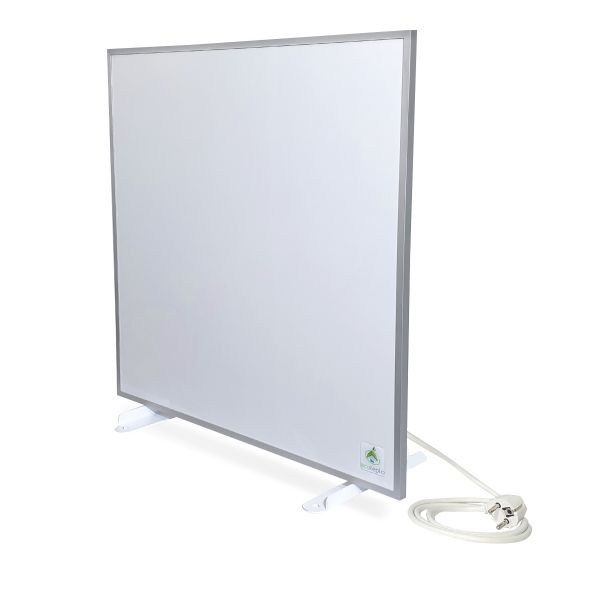
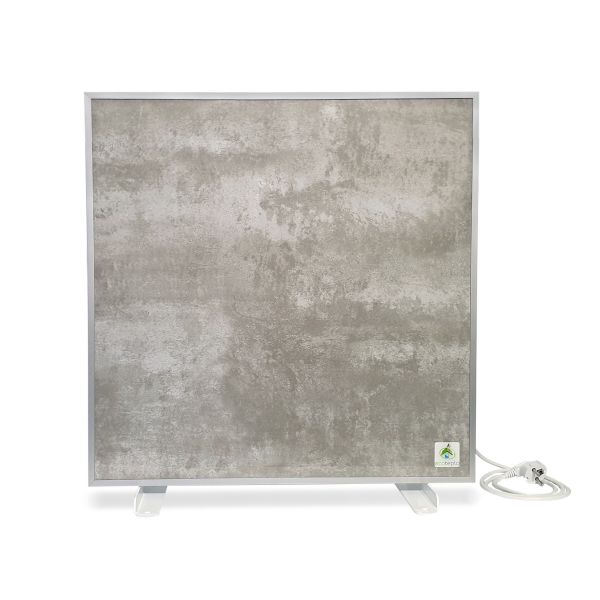
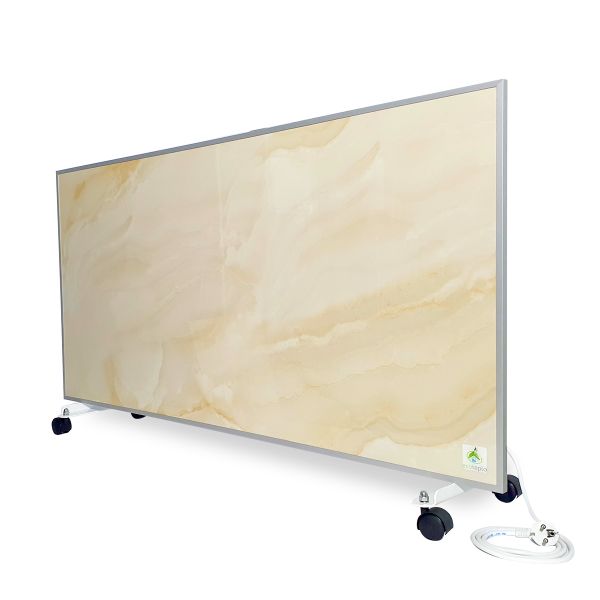
| ECOTEPLO ceramic panel | Moderate, even across the whole surface | Low — smooth heating with no local overheating |
| Quartz heater | Moderate, similar to a ceramic panel | Low |
What experience shows: do customers complain about dry air?
Based on inquiries from ECOTEPLO ceramic panel buyers, complaints about dry air are far less common than among owners of fan heaters or coil heaters — mainly thanks to even surface heating with no local "hot spots." That said, even with a ceramic panel in a very dry climate or running at full power round the clock in a small room, relative humidity still drops — that's physics, not the unit's quality.
The practical takeaway from customer experience: complaints about dry air are almost always tied not to the heater type, but to a lack of ventilation and a humidifier in a small, tightly closed room throughout the entire heating season.
Should you trust your own sensations or only instruments
Subjective feelings of dryness are highly individual: one person feels discomfort already at 45% humidity, while another feels fine even at 35%. This depends on individual sensitivity of the mucous membranes, skin condition, and even habit. So a hygrometer should be treated as an objective reference point, not an absolute truth — if the reading is within the comfortable range but discomfort persists, it's worth looking at other indoor climate factors: temperature, dust levels, presence of allergens.
How to minimize air dryness regardless of heater type?
- Ventilate the room regularly, even in winter — a few minutes several times a day refreshes the air and naturally maintains humidity.
- Use a humidifier in the bedroom or kids' room, especially with round-the-clock heating.
- Choose a heater with a thermostat so the unit doesn't run constantly at maximum but maintains the set temperature in cycles.
- Place a container of water or houseplants nearby if you don't want to buy a separate humidifier.
- Choose models with even surface heating — ceramic panels are objectively less harsh on the indoor climate than fan heaters.
Comparison with other heat sources in the home
It's worth understanding that electric heaters aren't the only thing affecting humidity — gas boilers, fireplaces, or solid-fuel stoves also reduce relative air humidity while running, and some (such as an open fireplace) additionally draw moist air out of the room through chimney draft, amplifying the dryness effect. Compared to them, sealed electric panels without open combustion are actually a somewhat gentler option in terms of impact on the indoor climate.
Can you completely avoid a drop in humidity from heating?
Completely — no, this is a physical law, not a flaw of a specific unit. But the difference between "dry and uncomfortable" and "comfortable despite lower humidity" is determined by the practical steps listed above, not by the heater's brand or price.
Why kids' rooms in particular cause the most parental concern
Parents are especially sensitive to the question of dry air when it comes to a kids' room, and not without reason: children breathe faster than adults, and their mucous membranes are more sensitive to overly dry air, which can increase the risk of respiratory irritation with prolonged exposure to a dry room. This doesn't mean the heater is harmful — it means humidity control matters more in a kids' room than in any other room.
Practical recommendations for a kids' room
- Choose a ceramic panel with a thermostat rather than a fan heater or a unit with an exposed element.
- Keep a hygrometer in the room and watch for a reading of 40-60%.
- Ventilate the room at least twice a day even in frosty weather.
- Add a humidifier if needed, especially while the child is sick.
More on safely heating a kids' room can be found in a separate material on heating a kids' room: safety and savings at the same time.
Do houseplants actually humidify the air
The effect of houseplants is largely overstated: even a significant number of plants in a room makes only a minor contribution to overall room humidity compared to a dedicated humidifier. Plants can be a pleasant addition to the interior and have an indirect positive effect on wellbeing, but they shouldn't be relied on as the main way to control humidity.
Does air temperature affect the subjective sense of dryness?
Yes, and this is another nuance often confused with air "drying out." The higher the room temperature, the more strongly dryness is subjectively felt even at the same relative humidity, since skin and mucous membranes lose moisture faster on contact with warm air. So maintaining a moderate temperature (18-21°C instead of 24-25°C) is another simple way to reduce discomfort that doesn't depend on the heater type.
A short summary on heaters and air dryness
The article's main takeaway is simple: no heater "dries" the air in the literal sense, but all of them reduce relative humidity through heating — that's physics, not a flaw in a specific model. The difference between heater types lies in subjective comfort, and here ceramic panels with even heating win out over fan heaters. Real humidity control comes from ventilation, a humidifier, and a hygrometer, not from choosing a particular heater brand.
What actual humidity measurements show
Rough observations from everyday practice show: in an unheated apartment in winter, relative humidity typically stays in the 50-60% range, while with active heating and no ventilation or humidifier it can drop to 25-30%, which is already noticeable for most people (dry throat, static electricity, cracking skin). The difference between heater types here is secondary compared to ventilation habits and having a humidifier — a key practical takeaway worth considering when choosing any heater.
Does dry air affect the heaters themselves and furniture?
Yes, and this is often overlooked. Very low humidity can negatively affect not just people's wellbeing but also wooden furniture, parquet flooring, and musical instruments, causing them to dry out and crack. This is another argument for humidity control regardless of heater type — a humidifier protects not just residents' health but the interior as well.
Myths about heaters and humidity worth debunking
- "Ceramic heaters don't dry the air at all." Not true — they reduce relative humidity less than fan heaters, but no heater type cancels out the physics of humidity dropping with heat.
- "An oil radiator is safer for humidity than a panel." The difference here is minimal — both types have a moderate surface temperature; the main difference is heating speed, not effect on humidity.
- "A heater with an ionizer solves the dryness problem." Air ionization has nothing to do with humidity — these are different physical processes, and having an ionizer doesn't replace a humidifier.
- "The lower the power, the less it dries the air." Not quite true — the decisive factor is runtime and surface temperature, not the unit's rated power itself.
A practical indoor-climate control plan for the heating season
- Get a household hygrometer and place it in the room where heating runs longest.
- Set a comfortable temperature range of 19-21°C instead of higher values.
- Ventilate the room at least twice a day for 5-10 minutes.
- Add a humidifier if needed, going by the hygrometer's readings rather than subjective feeling.
Can you trust "doesn't dry the air" advertising claims?
Such claims deserve a critical eye. No heater can physically avoid reducing relative humidity while heating air — that would violate the laws of physics. When a manufacturer claims "doesn't dry the air," it most often means a comparatively lower effect relative to fan heaters or units with an exposed element, not a complete absence of any effect on humidity. Understanding this difference helps you make an informed choice rather than buying a unit based on a marketing slogan.
A practical takeaway for parents and apartment owners
Instead of searching for the "perfect heater that doesn't dry the air" (which doesn't exist), it's smarter to focus on a set of measures: choose a unit with even surface heating and a thermostat, get a hygrometer for objective control, ventilate the room regularly, and use a humidifier if needed. This approach delivers a consistently comfortable indoor climate regardless of the specific heater model.
Sources and useful links
Recommended indoor climate parameters for residential spaces (temperature, relative humidity) are set by DSN 3.3.6.042-99 "Sanitary Norms for the Microclimate of Industrial Premises" and the corresponding building codes for residential buildings. To choose a model with even heating and a thermostat, see the ECOTEPLO ceramic heaters section, in particular the Premium Terra heaters category with advanced temperature control features.
Heaters don't "dry" the air in the literal sense — they reduce relative humidity through heating, and this applies to any heat source, from a radiator to a fireplace. The difference between heater types lies in subjective comfort, and here ceramic panels with even surface heating win out compared to fan heaters or units with an exposed coil.

-
Is it true that heaters dry out the air?
Technically a heater doesn't remove moisture from the air, but heating lowers the relative humidity — which is why the air subjectively feels drier, and this applies to any heat source.
-
Which heater type dries the air the least?
Ceramic panels with even surface heating are subjectively more comfortable than fan heaters or heaters with an exposed glowing coil.
-
Do you need a humidifier alongside a heater?
It depends on how long the heating runs, the room size, and how sealed the space is — with round-the-clock heating in a small room, a humidifier significantly improves comfort.
-
Is it safe to put a ceramic heater in a kids' room?
Yes, provided you follow safe distance rules and choose a model with even surface heating — more details in the material on heating a kids' room.
-
Why does a fan heater produce a burnt smell?
It's dust that has settled on the coil burning off on contact with the very hot element — a characteristic sign of units with an exposed heating element, not ceramic panels.
-
Does ventilating help with dry air from heating?
Yes, regular ventilation refreshes the air and naturally maintains comfortable humidity even with heating running constantly.
-
Does heater power affect how dry the air becomes?
Indirectly — a unit without a thermostat running constantly at maximum keeps the room at a higher temperature for longer, which lowers relative humidity more than a unit with a precise thermostat.
-
Can you measure indoor humidity yourself?
Yes, using a household hygrometer — a range of roughly 40-60% relative humidity is considered comfortable for a living space.