Cheap Room Heating: What Actually Saves Money

Quick answer: the cheapest way to heat a room in 2026 isn't the cheapest-priced appliance — it's a combination of spot-heating the room you actually need with a ceramic panel and thermostat, cutting heat loss (insulating windows and doors), and a smart operating schedule instead of heating the whole apartment or house around the clock.
The question "how to heat a room cheaply" usually gets reduced to finding the cheapest appliance in the store. But real savings come not from the price tag, but from electricity consumption over the whole heating season. A cheap 500 UAH fan heater can "eat" more in winter bills than a quality ceramic panel costs. This article covers working ways to cut heating costs without sacrificing comfort.
Why a cheap appliance doesn't always mean cheap heating
The cost of heating is determined not by the purchase price but by the appliance's power multiplied by hours of operation and the electricity rate. Two 1 kW heaters consume the same amount of electricity per hour of operation — the difference in savings comes from how efficiently an appliance retains heat, how precisely its thermostat regulates temperature, and whether it forces you to keep it running at maximum around the clock.
Three components of real heating savings
- Spot heating instead of heating the whole area — heat only the room you're actually in, not the entire house at once.
- Thermostat and a work schedule — maintaining a set temperature in cycles instead of running constantly at full power.
- Reducing heat loss — insulating windows, doors, and windowsills reduces the required heating power by 20-30%.
Comparing cheap heating options
| Option | Upfront cost | Running cost | Practicality |
|---|---|---|---|
| Cheap fan heater | Minimal | High — runs constantly at maximum, short lifespan | Low, noisy, dries the air |
| Ceramic panel with thermostat | Moderate | Lower thanks to precise temperature control | High, quiet, durable |
| Oil-filled radiator | Moderate | Moderate, takes longer to reach working temperature | Medium, heavy, slow |
| Window and door insulation | One-time investment | Cuts the cost of any heating by 20-30% | Highest long-term payback |
Alternatives: heat pumps and gas heaters
If you already have an inverter air conditioner, in winter it can be used as a heat pump: at normal outdoor temperatures it delivers more thermal energy to the room than the electrical energy it consumes (COP above 1), making it one of the cheapest ways to heat per kW of heat. But efficiency drops sharply once it's below -10°C outside — the pump then works like an ordinary electric heater with no savings. Liquefied gas (bottled) heaters don't depend on the power grid and warm a room in 15-20 minutes, making them a niche solution specifically for long power outages rather than everyday economical heating — the cost of bottled gas per unit of heat is usually higher than electricity when power supply is stable.
How to calculate the real cost per hour of heating
The formula is simple: appliance power in kW multiplied by the rate per kWh gives the cost of one hour running at full power. For example, a 1 kW heater at a rate of 4.32 UAH/kWh costs 4.32 UAH per hour of continuous operation. But a thermostat switches the appliance off once the room has reached the set temperature, so actual daily consumption is usually 40-60% of the rated power multiplied by 24 hours.
Example calculation for a 15 m² room:
- Calculated heater power — 1.2 kW;
- Actual duty cycle with a thermostat — roughly 50% of the time;
- Daily consumption — about 14.4 kWh;
- Daily cost at a rate of 4.32 UAH/kWh — approximately 62 UAH.
Why spot heating is more economical than central heating of the whole home
If during the day you're actually in one or two rooms while the rest of the space is empty, there's no point maintaining the same temperature everywhere. Spot heating one or two active zones with ceramic panels and separate thermostats can lower overall costs compared to centrally heating the whole house to the same temperature.
Practical experience: what actually lowers bills
According to users who switched to spot heating of individual rooms instead of heating the whole home around the clock, the biggest effect comes not from swapping one appliance for another, but from changing the usage pattern: a lower temperature at night (by 2-3°C), closed doors to unused rooms, and a thermostat instead of manually switching the appliance on and off "by feel."
A second practical point is the condition of windows and doors. Even the most economical heater can't compensate for heat loss through old wooden frames or drafts under the entrance door. Simple, inexpensive measures — window weatherstripping, insulating windowsills, door curtains — often deliver more noticeable savings than searching for the cheapest appliance.
A common mistake: heating "just in case" at full power
Many users leave the heater running at full power "just in case," even when the room is already comfortable. This doesn't speed up heating once the set temperature is reached — it just wastes extra electricity. A thermostat with a clear setting is always more economical than manual control by feel.
When to consider a two-zone tariff
If the main heating load falls on evening and morning hours, and the apartment is empty during the day, it's worth evaluating two-zone electricity metering with a lower night rate. With such a tariff it's advantageous to schedule heating for night hours with a pre-programmed thermostat, keeping the room warm until morning.
Which appliances to choose for economical heating
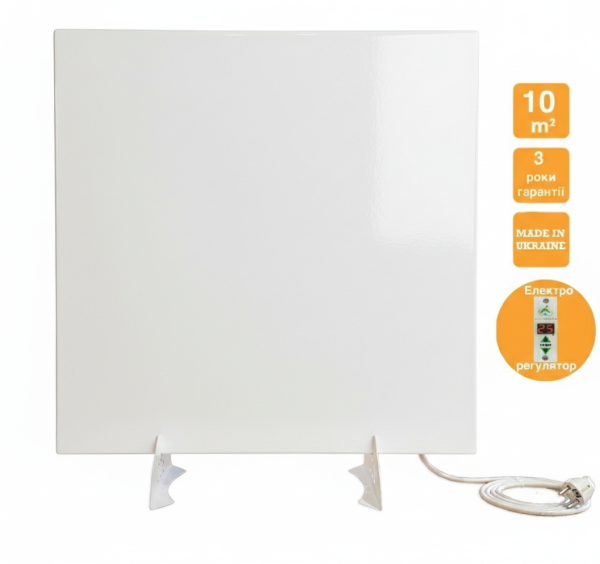
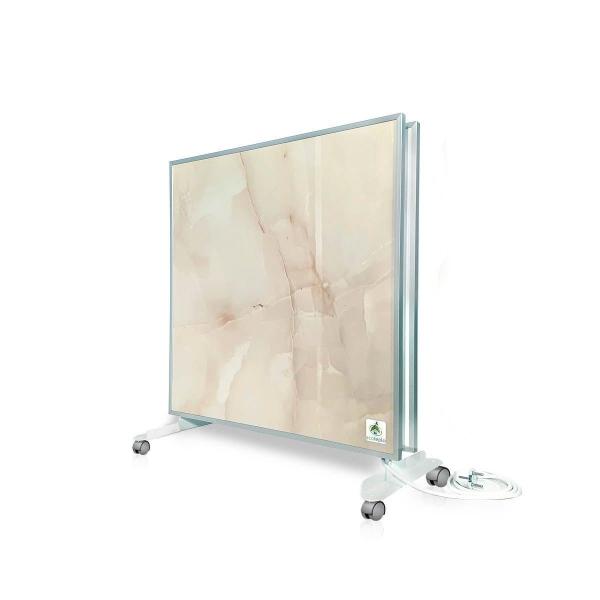
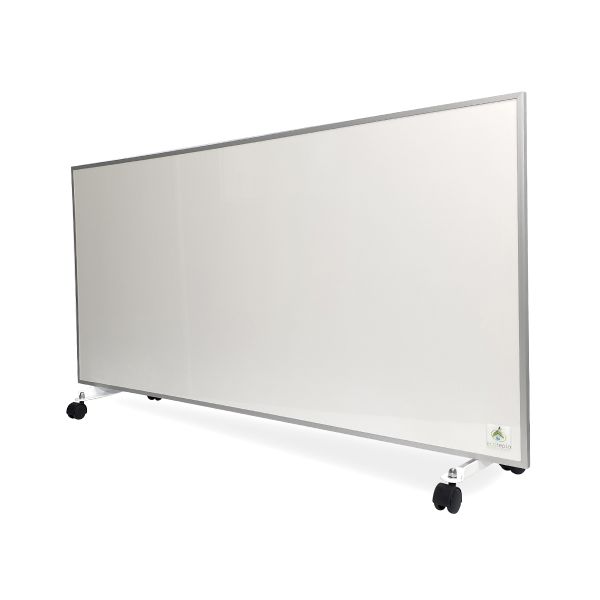
For spot economical heating, small and medium-power ceramic panels work well — they quickly reach working temperature, are precisely regulated by a thermostat, and don't have high startup consumption. Model range by area:
- Heaters up to 10 m² — for small rooms or spot heating of a workspace;
- Heaters up to 18 m² — for bedrooms and medium-sized children's rooms;
- Heaters up to 20 m² — for a living room or kitchen-living room;
- Heaters up to 30 m² — for studios and large open-plan rooms.
For more on matching power to room area, see "How to Correctly Choose Heater Power for Room Area", and for real monthly costs, see "How Much a Heater Consumes Per Month".
Conclusion
Cheap room heating isn't about a cheap appliance — it's about correct power calculation, spot heating of active zones, a thermostat instead of manual control, and basic window and door insulation. Together these measures deliver much more noticeable savings over a season than hunting for the cheapest heater on sale.
Sources and useful links
- DBN V.2.6-31:2021 "Thermal Insulation of Buildings" — requirements for the thermal insulation of building envelopes
- Catalog of ECOTEPLO ceramic heaters to select an economical model

-
Which heater is the cheapest to run?
The cheapest to run is not the cheapest-priced appliance, but a heater with a precise thermostat that cycles on and off to maintain a set temperature rather than running continuously at full power.
-
How much does it cost to heat a 15 m² room per day?
By rough calculation, with a 1.2 kW heater and a thermostat duty cycle of about 50% of the time, the cost is approximately 60-65 UAH per day at the current electricity rate.
-
Is it more economical to heat the whole home or one room?
Spot heating one or two active rooms is usually more economical if the rest of the space isn't actually used during the day.
-
Is it worth buying the cheapest fan heater to save money?
No, cheap fan heaters have high consumption at full power, a short lifespan, and usually lack a precise thermostat, which increases actual costs over a season.
-
What saves more: a new heater or insulating the windows?
Insulating windows and doors often delivers more noticeable long-term savings than replacing one heater with another, since it reduces the room's heat loss by 20-30%.
-
Is a two-zone tariff worthwhile for heating?
Yes, if the main load falls on evening and night hours, a two-zone tariff with a lower night rate can cut costs when paired with a programmable thermostat.
-
How much does a thermostat reduce heating costs?
A thermostat usually reduces actual consumption by 30-50% compared to running the appliance continuously at full power without regulation.
-
Can a large room be cheaply heated with one heater?
For rooms over 20 m², choose a model of appropriate power from the heaters-up-to-30-m² category; otherwise an underpowered appliance will run continuously at maximum and consume more electricity without reaching a comfortable temperature.
-
Does ceiling height affect heating cost?
Yes, rooms with high ceilings (over 2.7 m) have a larger volume of air to heat, so they require a higher calculated heater power and, accordingly, higher costs.
-
How do you know a heater is using too much electricity?
If the appliance runs continuously at full power and the room is still not warm enough, this indicates either insufficient power for the room's area or significant heat loss through windows and doors that should be addressed separately.