What Is a Bioconvector and How Is It Different From a Regular Heater

Quick answer: a bioconvector is a household electric heater that combines convective air heating with infrared radiation from a heated ceramic or glass surface. This produces faster room heating compared to a classic convector and a more comfortable sense of warmth, since it's not just the air mass that warms up but also the surfaces and objects in the room.
The term "bioconvector" often appears in descriptions of modern household heaters, but not everyone understands how such a device differs from a regular convector or an oil radiator. Let's look at how it works, its advantages, and what to watch for when choosing one.
How does a bioconvector work?
A classic convector heats only air: cold air enters at the bottom of the device, passes through the heating element, and exits warm at the top, creating natural circulation. A bioconvector works on a similar principle but has an additional infrared component — a heated ceramic panel or glass surface radiates heat directly onto people, furniture, and walls, not just the air.
Thanks to this, a sense of comfort appears in the room faster: even before the air fully warms up, surfaces and the person in the room already receive some heat directly through radiation.
Main structural elements
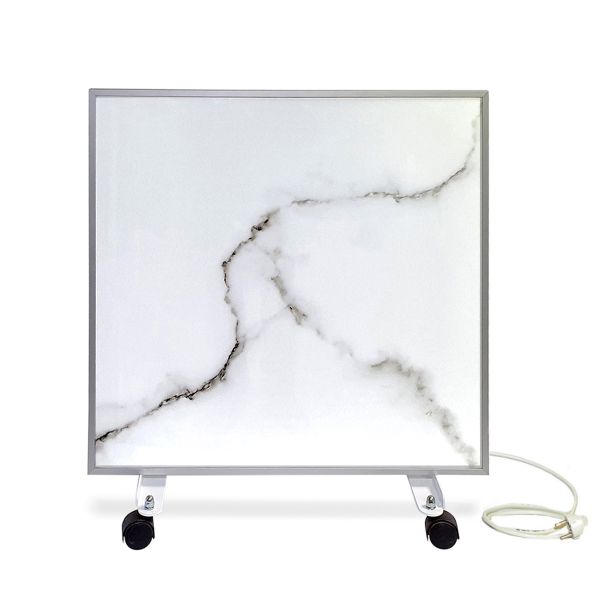
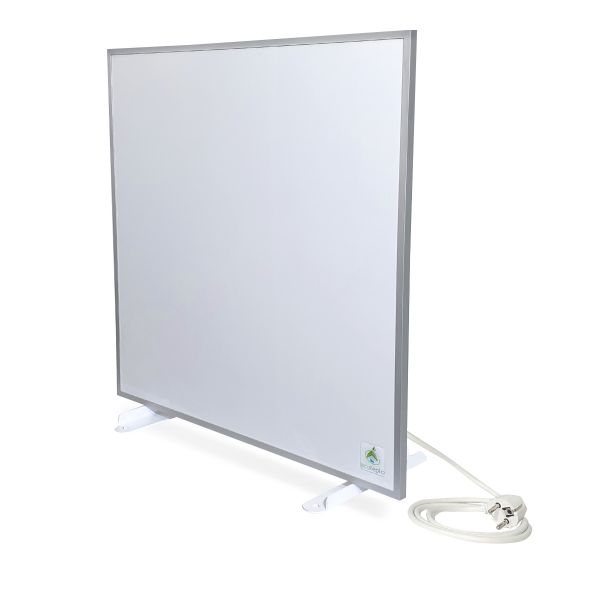
- A ceramic or glass heating panel — the source of infrared radiation.
- A sealed aluminum X-shaped heating element — a separate source of convective air heating that works alongside the ceramic panel.
- A housing with vents for natural air convection.
- A thermostat to maintain the set temperature.
- An overheat and tip-over protection system.
An important technical nuance: in a quality bioconvector, these are two genuinely separate heating elements in one housing — a ceramic IR panel and an aluminum heating element for convection — not a single panel performing both functions at once. This is exactly what distinguishes a true bioconvector from a plain ceramic panel without an additional convective element.
How is a bioconvector different from a regular heater?
| Parameter | Classic convector | Bioconvector |
|---|---|---|
| Heating principle | Air only | Air + infrared radiation |
| Speed of perceived warmth | Slower, depends on heating the entire air volume | Faster due to direct radiation |
| Effect on air humidity | Minimal with a thermostat | Minimal, the surface doesn't heat up to critical temperatures |
| Typical use | Background temperature maintenance | Primary or supplementary heating of living rooms |
Advantages of bioconvectors
- A comfortable sense of warmth even at a slightly lower air temperature thanks to radiation.
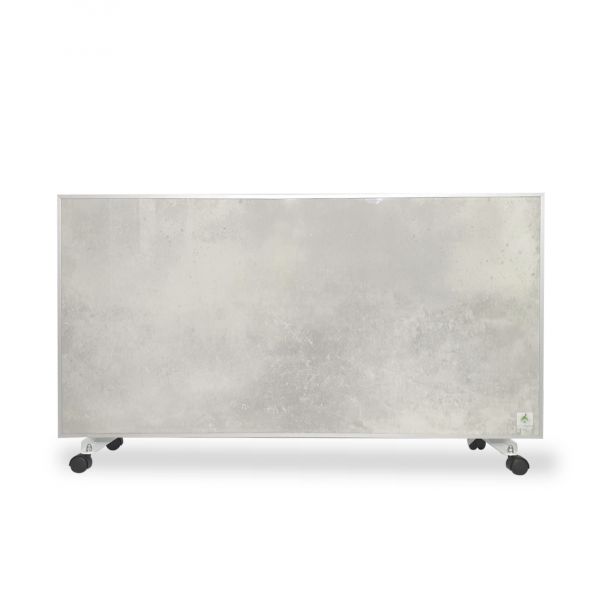
- Aesthetic appearance — ceramic panels often double as wall decor.
- Silent operation without a fan.
- Energy efficiency when used together with a thermostat.
Is a bioconvector suitable for continuous use?
Yes, provided the output is correctly matched to the room's area and a thermostat is present. The device is designed for long, safe operation, including at night or in a temperature-maintenance mode when residents are away during the day. For more on the safety of long-term operation of ceramic devices, see the article can a ceramic heater be left on overnight.
What experience shows
According to owners who switched from oil radiators to ECOTEPLO ceramic bioconvectors, the most noticeable difference is the speed at which the room feels "noticeably warm": not only does the thermometer show a higher temperature, but the subjective sense of comfort also appears sooner. This is especially valued in bedrooms and children's rooms, where it matters to create comfortable conditions quickly without a long wait for the entire air volume to warm up.
Another practical point is placement. Since part of the heat is transferred by radiation, a bioconvector's effectiveness depends on whether the panel has direct "contact" with people and surfaces in the room: a device blocked by furniture or curtains loses part of its advantage over a classic convector. For placement recommendations, see the article where is the best place to mount a ceramic heater.
How to choose a bioconvector's output?
A rough estimate is about 100 W of output per 1 m² of room area at standard ceiling height and adequate insulation, adjusted for corner rooms, large windows, or poor insulation. For a detailed calculator and examples, see the article minimum output for heating an apartment. Catalog of models by area — heaters up to 18 m² and heaters up to 20 m².
Bioconvectors and safety
An important expert detail: the surface temperature of a quality ceramic bioconvector doesn't rise to levels dangerous for accidental touch, unlike some halogen or quartz infrared devices with an exposed element. This makes bioconvectors an acceptable option for children's rooms, provided basic safe-placement rules are followed — away from curtains, beds, and damp areas.
Sources and useful links
Requirements for household electric heating devices are governed by low-voltage equipment safety technical regulations in force in Ukraine in accordance with DSTU EN 60335. Choose only certified models with clear power and protection class labeling. Catalog of certified ceramic bioconvectors — ECOTEPLO ceramic heaters.
A bioconvector isn't a marketing term but a specific combination of two heating principles in one device. For most living spaces, it's one of the most balanced electric heating options in terms of comfort, safety, and energy efficiency.

-
What is a bioconvector in simple terms?
It's an electric heater that combines convective air heating with infrared radiation from a heated panel, so warmth is felt faster and more comfortably.
-
How is a bioconvector different from an infrared heater?
A bioconvector combines both principles — convection and radiation — while a purely infrared device mainly heats surfaces in a direct line, without active air circulation.
-
Does a bioconvector dry out the air?
Quality ceramic models with a thermostat don't heat up to critical temperatures and don't dry out the air the way open coil heaters do.
-
What output should I choose for a bioconvector in a 15 m² room?
Roughly 1,000-1,500 W depending on ceiling height, number of windows, and the room's insulation quality.
-
Can a bioconvector be left on overnight?
Yes, with a thermostat and safe placement of the device, it is designed for long continuous operation.
-
Is a bioconvector suitable for a children's room?
Yes, provided it is placed out of a child's reach and a model with a surface that doesn't heat up to dangerous temperatures is chosen.
-
How much electricity does a bioconvector consume?
Actual consumption depends on the model's output and whether it has a thermostat that switches the device off once the set temperature is reached, lowering average consumption compared to a device without regulation.
-
Can a bioconvector be mounted on a wall?
Yes, most models come with wall mounts and are specifically designed for wall installation to save space.
-
What makes a bioconvector better than an oil radiator?
It creates a sense of warmth faster, runs silently, carries no risk of oil leaks, and is usually more compact at comparable output.