Brooder Heater: How to Choose and Install One for Chicks

- Why a ceramic heater beats incandescent lamps
- How many watts does a brooder need: power calculation
- Temperature schedule by week
- How to tell if the temperature is right
- Safe placement of the heater in the brooder
- Hanging height and distance to the litter
- Protection from moisture and dust
- Practical experience: a typical use case on a farm
- Common mistakes when choosing a brooder heater
- Comparison of heating types for a brooder
- How much brooder heating costs over a growing season
- Is a ceramic heater suitable for ducklings, goslings, and other young poultry
- Brooder ventilation and its interaction with heating
- Humidity control alongside heating
- Brooder housing materials and heat loss
- Placing multiple heaters in a large brooder
- Transitioning from a brooder to regular housing
- Electrical safety when heating a brooder
- Backup heat source in case of a power outage
- Cleaning and storing the heater between seasons
- Thermometer placement for monitoring
- Sources and useful links
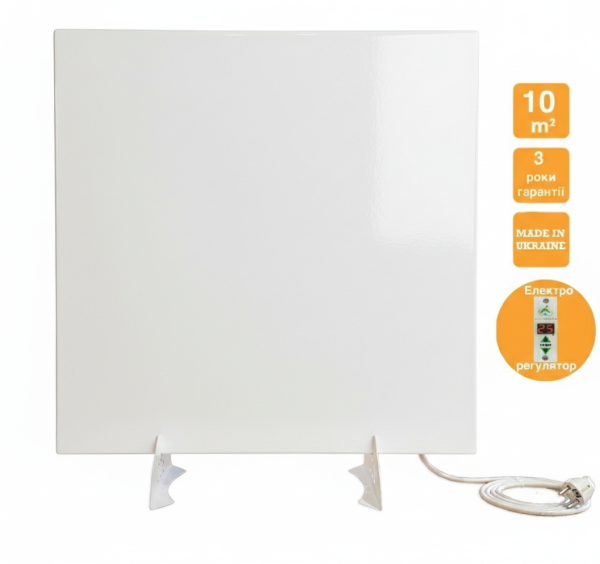
Quick answer: for a brooder with 20-30 chicks, the optimal choice is a ceramic heater with 300-700 W output and adjustable settings or a thermostat. Ceramic has no exposed heating element, doesn't blind the birds with constant light (unlike incandescent lamps), and gives even, gentle heat without over-drying the air. The main rule — during the first week of a chick's life, the temperature under the heater should be about +32...+35°C, gradually decreasing by 2-3°C each week.
Winter-raising chicks or other young poultry in a brooder is, above all, a matter of stable temperature. A newly hatched chick cannot regulate its own body temperature and depends 100% on an external heat source. A mistake with the heater is costly: hypothermia leads to illness and death, while overheating leads to dehydration and heat stress. In this article we'll cover how to properly choose a ceramic brooder heater, what temperature to maintain by day, and what to watch for during installation.
Why a ceramic heater beats incandescent lamps
Traditionally, infrared incandescent lamps are used for brooders. They have significant drawbacks: the glass bulb can shatter from a drop of water or a jolt, the lamp shines bright red or white light around the clock, disrupting the chicks' natural sleep cycle, and the service life rarely exceeds a few months of intensive use.
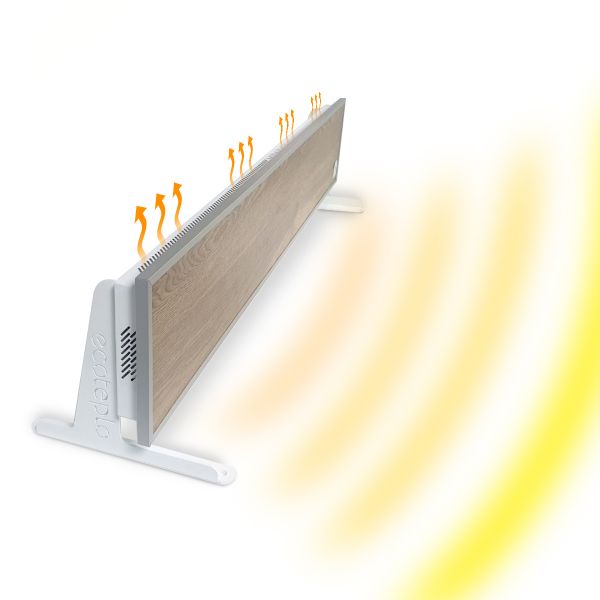
A ceramic heater has no exposed glowing element or breakable glass, doesn't emit bright light (only heat), runs quietly, and lasts longer. For farms and households where the brooder sits in a barn or garage without constant supervision, this significantly reduces the risk of fire and injury to the birds.
How many watts does a brooder need: power calculation
| Number of chicks | Approximate heater output | Category on the site |
|---|---|---|
| up to 15 head | 300-400 W | up to 10 m² |
| 15-40 head | 400-700 W | up to 18 m² |
| 40-80 head | 700-1000 W | up to 20 m² |
These are approximate figures for a brooder room with minimal insulation and no through-drafts. In an uninsulated barn or an open veranda, it's worth choosing a heater with a power reserve one class higher, and also keeping in mind that birds don't need an even temperature across the whole brooder — rather a warm zone under the heater and a cooler zone at the edges, so the chicks can regulate their own comfort by moving closer or farther away.
Temperature schedule by week
- Week 1: +32...+35°C directly under the heater.
- Week 2: +29...+32°C.
- Week 3: +26...+29°C.
- Week 4: +23...+26°C.
- Weeks 5-6: gradual decrease to room temperature of +18...+20°C, after which additional heating is usually no longer needed.
The general rule of thumb is a reduction of about 2-3°C per week. A model with a thermostat lets you set these values precisely and maintain them automatically, while without a thermostat you have to adjust the hanging height of the heater above the litter manually.
How to tell if the temperature is right
The chicks' behavior is the most accurate indicator. If the birds huddle in a tight cluster directly under the heater and cheep — it's too cold. If the chicks scatter as far as possible from the heat source, often pant with an open beak, and drink a lot of water — it's too hot. Even distribution across the whole brooder area, with some chicks warming up and others calmly eating or drinking farther from the heater, is a sign the temperature is set correctly.
Safe placement of the heater in the brooder
Hanging height and distance to the litter
The heater is hung above the heating zone, leaving enough space so the chicks physically cannot reach the hot panel, while heat still reaches litter level. Always check the exact distance in the instructions for the specific model, since it depends on the wattage.
Protection from moisture and dust
Brooder litter is both a source of dust and a moist environment due to the birds' watering. The heater should be positioned to avoid direct contact with water, and the panel should be cleaned of dust regularly, since dust settling on the warm surface can reduce heat output.
Practical experience: a typical use case on a farm
Farmers switching from incandescent lamps to ceramic heaters most often note two practical effects: less nervous behavior in chicks due to the absence of bright light at night, and a noticeable drop in equipment-replacement costs over the season — the ceramic panel doesn't shatter or burn out as often as a lamp. When raising a batch of 30-50 head, one 500-700 W heater with a thermostat usually covers the need from hatching to 4-5 weeks of age, after which additional heating in a warm room is no longer necessary.
Common mistakes when choosing a brooder heater
- Too powerful a unit without a thermostat — risk of overheating and dehydration in young birds.
- A heater without moisture protection in a room with high litter humidity.
- Hanging it too close to the litter — risk of burns or ignition of straw or sawdust bedding.
- No cool zone — when heating is even across the whole brooder area, chicks can't regulate their own comfort.
Comparison of heating types for a brooder
| Heating type | Safety | Service life | Effect on birds |
|---|---|---|---|
| Incandescent lamp (infrared) | Risk of broken glass, exposed glowing element | A few months of intensive use | Bright light around the clock disrupts sleep cycle |
| Film/strip heater | Moderate, requires careful installation | Medium | Gentle heat but a smaller heating area |
| Ceramic heater | High, no exposed element or glass | Long | Even heat, doesn't disturb sleep cycle |
How much brooder heating costs over a growing season
Costs depend on the unit's wattage, the duration of active heating (typically 4-6 weeks per batch), and whether it has a thermostat. A heater without a thermostat runs continuously at full power the whole time it's plugged in, while a model with a thermostat cycles on and off to maintain the set temperature — this noticeably reduces total electricity consumption over the season for raising one batch of young birds, without sacrificing comfort.
Is a ceramic heater suitable for ducklings, goslings, and other young poultry
The principle of sizing the wattage and gradually lowering the temperature week by week is the same for most poultry species, though the specific target temperature values may differ by species — ducklings and goslings, for example, usually need a slightly lower starting temperature than chicks. The main rule remains universal: watch the young birds' behavior and adjust the hanging height or thermostat settings based on their actual response, not just table values.
Brooder ventilation and its interaction with heating
Heating without proper ventilation creates a risk of moisture and ammonia buildup from droppings, which is harmful to young birds' respiratory systems even at a perfectly set temperature. At the same time, excessive draft near the heater creates local cold zones that disrupt the chicks' even distribution across the area. The optimal solution is fresh air intake outside the direct line from the heater to the litter, so as not to create a cold current right in the warm zone.
Humidity control alongside heating
Ceramic heaters don't dry out the air as severely as some other heat sources, but in an enclosed brooder, moisture from drinking water and droppings still builds up. It's recommended to keep a hygrometer next to the thermometer and adjust litter-change frequency as needed — dry litter is important for foot health and reduces the risk of pathogenic microflora developing even at the right temperature.
Brooder housing materials and heat loss
The heater's efficiency depends directly on how well the brooder retains heat. Wooden or foam walls retain heat significantly better than uninsulated metal sides, so in an uninsulated metal brooder it's worth budgeting a 20-30% power reserve above the calculated value, or additionally insulating the walls with makeshift materials before the season starts.
Placing multiple heaters in a large brooder
For a large brooder or a mini-farm with several sections, one heater is often not enough — heat doesn't have time to distribute evenly across the whole area. In that case, it's more efficient to install two lower-power heaters at different ends of the room rather than one powerful unit in the center: this creates several warm zones instead of one, reduces crowding of young birds in one spot, and lowers the risk of suffocation or injury to chicks pressing against each other under a single heat source.
Transitioning from a brooder to regular housing
The moment young birds are ready to do without additional heating isn't determined by the calendar but by behavior and feathering — once the birds are covered with enough plumage and move actively across the whole room without crowding, the heater can be phased out, first by reducing its running time rather than switching it off all at once.
Electrical safety when heating a brooder
A brooder is often placed in rooms with elevated humidity and the presence of droppings and dust, so nearby wiring and outlets should match the operating conditions — it's best to use moisture-protected outlets or route the connecting cable outside the zone where moisture or droppings could reach it. The heater's cable shouldn't lie on the litter, where the birds themselves could damage it or where it would be in contact with a moist environment.
Backup heat source in case of a power outage
Since young birds are completely dependent on external heating, it's worth planning a backup option in advance for power outages — this could be extra insulation for the brooder with blankets or straw to slow heat loss, or a small generator or power station to briefly keep the heater running during a critical period, especially in the first week of a chick's life, when sensitivity to hypothermia is highest.
Cleaning and storing the heater between seasons
After the growing season ends, the heater should be thoroughly cleaned of dust, down, and litter residue that may have settled on the panel over weeks of use. Before long-term storage, it's best to keep the unit in a dry room without sharp temperature swings — this extends the service life of the ceramic element and reduces the risk of moisture damage to the wiring before the next season.
Thermometer placement for monitoring
The reading on the heater's control unit display shows the temperature right next to the unit's own sensor, which doesn't always match the temperature at litter level, where the chicks actually are. It's recommended to additionally place a separate thermometer at the young birds' back height in the heating zone and rely on that reading, adjusting the hanging height or thermostat settings as needed.
Sources and useful links
- DSTU 7158:2010 "Household electrical appliances. General safety requirements" — baseline requirements for household heating appliances.
- ECOTEPLO ceramic heater catalog for choosing a model by wattage.
- Fittings and heater accessories for mounting and hanging.
A ceramic heater for a brooder is, above all, about stability and safety: predictable temperature without the risk of broken glass or an exposed glowing element. Properly sized wattage and a gradual weekly temperature decrease give chicks comfortable growing conditions without unnecessary stress for the poultry keeper.

-
What wattage heater is needed for a brooder with 20 chicks?
Approximately 300-400 W for a small, insulated brooder. In a cold room, it's worth choosing a unit with a power reserve one class higher.
-
What temperature do chicks need during their first week of life?
+32...+35°C directly under the heater, with a gradual decrease of 2-3°C each week down to room temperature by around week 5-6.
-
Is a ceramic brooder heater safer than a lamp?
Yes, it's safer: there's no breakable glass bulb, no exposed glowing element, and bright light doesn't disrupt the birds' natural sleep cycle.
-
How can you tell if chicks are cold or too hot?
If chicks huddle tightly under the heater and cheep — it's too cold. If they scatter far away and pant with an open beak — it's too hot. Even distribution across the brooder is a sign of a comfortable temperature.
-
Does a brooder heater need a thermostat?
A thermostat is recommended, since it lets you maintain the needed temperature precisely and automatically without manually adjusting the unit's hanging height.
-
At what height should the heater be hung above the litter?
The exact distance depends on the specific model's wattage and is given in its instructions; the main rule is that chicks must not have physical access to the hot panel.
-
How long does a brooder need to be heated?
Active supplementary heating is usually needed from hatching until 4-6 weeks of age, after which, at room temperature, young birds no longer need a separate heat source.
-
Can a brooder heater be used in an unheated barn in winter?
Yes, but it's worth choosing a unit with a power reserve and providing minimal insulation for the brooder against drafts, since cold air around it increases heat loss.
-
Does a ceramic heater dry out the air in a brooder?
Ceramic panels heat mainly through convection and infrared radiation and don't dry out the air as noticeably as some other heater types.
-
What if some chicks stay away from the heater?
That's normal as long as the brooder has both a warm and a cooler zone — the birds regulate their own comfort that way. A warning sign is when the whole flock crowds into one corner.