Ceramic Heaters: Why They Offer the Best Price-to-Efficiency Ratio

- What makes up the real cost of a heater?
- Why is ceramic so effective?
- How a ceramic heating element works
- Comparison with alternative heater types
- Key advantages of ceramic panels
- What affects the price of a ceramic heater?
- What experience shows
- How to avoid overpaying when choosing?
- Sources and useful links
Quick answer: ceramic heaters offer the best price-to-efficiency ratio among household electric heaters thanks to a combination of moderate cost, a long service life (10+ years), low energy consumption when paired with a thermostat, and comfortable infrared-convection heating. Calculated per year of use, they usually end up cheaper than cheaper but less durable alternatives.
When choosing an electric heater, buyers often focus only on the price tag in the store, forgetting to calculate the total cost of ownership — including energy consumption and service life. It's this full calculation where ceramic panels beat most competitors.
What makes up the real cost of a heater?
The sticker price is only part of the expense. The total cost of owning a device over several years includes:
- The initial purchase price.
- Electricity costs over the entire period of use.
- The likelihood of breakdown and the cost of repair or replacement.
- The service life before it needs replacing.
A cheap fan heater or coil heater might cost half as much upfront but consume more electricity and need replacing within 2-3 years — whereas a ceramic panel lasts 10 years or more.
Why is ceramic so effective?
How a ceramic heating element works
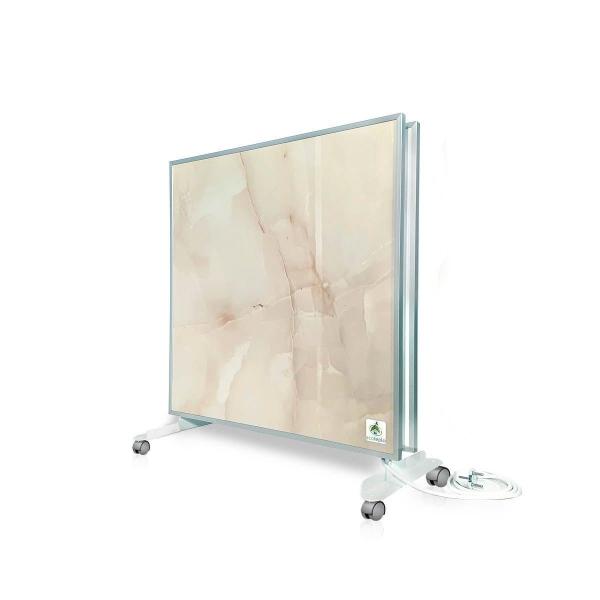
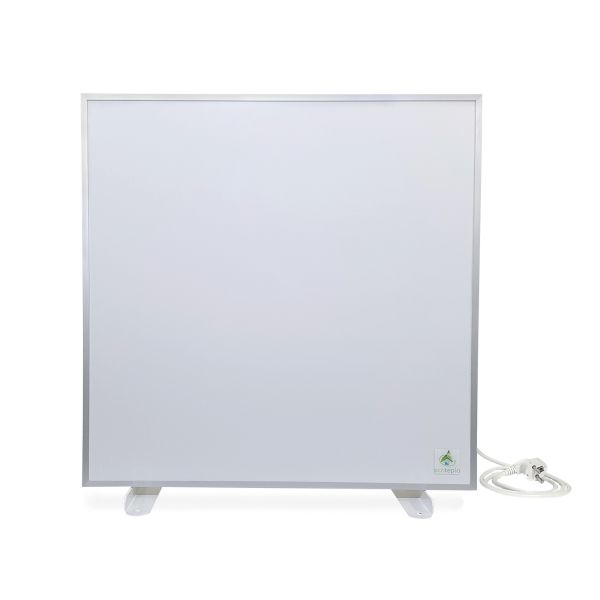
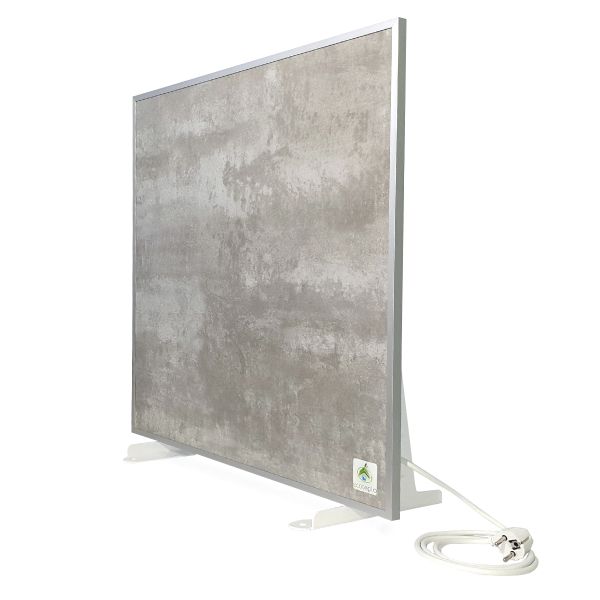
A ceramic panel heats evenly across its whole surface and releases heat slowly — both through convection (heating the air) and infrared radiation (directly warming people and surfaces). This means the device doesn't need to reach extreme temperatures the way coil or halogen elements do, and instead runs in a gentler, more energy-efficient mode.
The ceramic material also retains heat for a while after the heating element switches off — the panel keeps releasing stored heat, reducing how often the thermostat cycles on.
Comparison with alternative heater types
| Heater type | Approximate service life | Energy efficiency | Comfort of use |
|---|---|---|---|
| Ceramic heater with a thermostat | 10+ years | High, thanks to cyclic operation | High, silent, doesn't dry out the air |
| Oil radiator | 5-8 years | Medium, slow to warm up | Medium, heavy, slow to respond to power changes |
| Fan heater | 2-4 years | Low, runs at full power | Low, noisy, dries out the air |
| Quartz/coil heater | 3-5 years | Medium | Burn risk on contact, dust fire hazard |
Key advantages of ceramic panels
- Safe surface temperature — reduced risk of burns and fire.
- No exposed heating element and no smell of burning dust.
- Compatible with thermostats and timers for precise consumption control.
- Compact wall mounting that saves space.
What affects the price of a ceramic heater?
A model's price depends on its output, panel size, whether it has an electronic thermostat (versus a mechanical one), housing materials, and brand. The ECOTEPLO catalog covers devices for different room sizes — from heaters up to 10 m² to more powerful solutions in the heaters up to 30 m² category, with a premium line featured in the Terra series.
What experience shows
According to customers who switched from fan heaters or coil heaters to ceramic panels, the difference in the monthly electricity bill for a 15-18 m² room averaged 20-35%, depending on usage pattern and the room's insulation level. Subjective comfort also improved — owners noted the absence of dry air and more even room heating without sharp temperature swings near the device.
A practical nuance that's often underestimated: ceramic panels less often fail due to a burnt-out element, since they operate in a gentler temperature range. This means fewer repeat costs for equipment replacement during the heating season — an important, if not immediately obvious, factor in real savings.
How to avoid overpaying when choosing?
The main expert advice is not to focus solely on the lowest price in the category. A model without a thermostat or with a low-quality housing may end up more expensive to run due to higher electricity costs and a shorter service life. The rational approach is to compare price relative to expected service life and the presence of basic energy-saving features. For more on common selection mistakes, see the article top mistakes when choosing a household heater, and for sizing output, see how to correctly choose heater output for your room's area.
Sources and useful links
Safety and energy-efficiency requirements for household electric heating devices in Ukraine are set by technical regulations in accordance with DSTU EN 60335-2-30 and related electrical safety standards. Catalog of certified ceramic heaters — ECOTEPLO ceramic heaters.
Ceramic heaters aren't the cheapest option on the shelf, but taking into account purchase price, service life, and electricity costs together, they consistently show the best price-to-efficiency ratio among household electric heaters.

-
Why are ceramic heaters more expensive than fan heaters?
Because of the more durable heating element material, a safer design, and the presence of a thermostat, which ultimately lowers the total cost of ownership over the service life.
-
How long does a ceramic heater last?
With proper use — 10 years or more, significantly longer than fan heaters or coil-type equivalents.
-
Is a ceramic heater more economical than an oil radiator?
Yes, due to faster warm-up, cyclic operation with a thermostat, and no heat losses from warming up a large volume of oil.
-
What is the difference between a ceramic panel and a ceramic convector?
A panel relies more on infrared radiation, while a convector relies mainly on air circulation; see the article ceramic panel or ceramic convector for details.
-
Can a ceramic heater be used as primary heating?
Yes, provided the output is correctly matched to the area and enough units are used for the whole house or apartment.
-
What has the biggest effect on the price of a ceramic heater?
Output, the size of the heating panel, the type of thermostat (electronic or mechanical), and the quality of the housing materials.
-
Are ceramic heaters safe for children and pets?
Yes, thanks to a moderate surface temperature and the absence of an exposed hot element, provided basic safe-placement rules are followed.
-
Is there a difference in efficiency between cheap and expensive ceramic models?
The difference usually comes down to thermostat accuracy, housing material quality, and how evenly the panel heats up, which affects actual energy consumption.