Electric Heating for a House and Cottage: How to Choose the Best Option

Quick answer: electric heating for a house or cottage pays off fastest when you choose ceramic panels and direct-action electric radiators instead of an electric boiler or underfloor heating — they need no permits, install in about an hour, and use 40-60% less energy than outdated convectors or cast-iron radiators with gas heating. The key is to correctly calculate the power needed per room, factor in the house's insulation level, and have a backup plan for power outages.
As gas prices rise and power outage schedules have become a normal part of winter, more and more house and cottage owners are looking for a heating method that doesn't depend on pipes, chimneys, or utility permits. Electric heating looks like the simplest solution, but that's exactly where the trap lies: a turnkey electric boiler or underfloor heating system can cost as much as gasifying the house, with payback stretching over years rather than a single season.
In this article we break down which electric heating options are genuinely cost-effective from the very first season, how much installation costs using a specific house as an example, how to calculate the required power yourself, and why ceramic panels and electric radiators beat boilers and underfloor heating where installation speed and budget flexibility matter.
What electric heating options exist and how they differ
When it comes to electric heating for a house, most people immediately think of an electric boiler with water radiators or underfloor heating. But these are just two of several options, and not always the most cost-effective for a private house or cottage.
- Electric boiler + radiators — requires a separate power line, often an increased input capacity, permit documentation for a special tariff, and pipe installation throughout the house. Payback is no sooner than 2 years, not counting installation and labor costs.
- Underfloor heating — comfortable, but a slow and expensive solution: cable or mat, floor insulation, automation, additional wiring, and removal of the old flooring. Payback stretches to 5-7 years, and underfloor heating is usually used as an addition to warm your feet rather than as the main heating for the whole room.
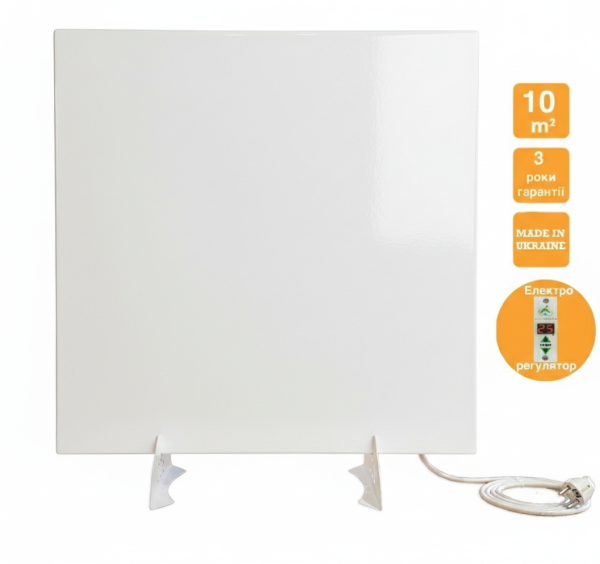
- Ceramic infrared panels and convectors — mounted on a wall with 2 holes for anchors, plugged into a regular outlet, no separate permits or approvals needed. This is the fastest and cheapest way to start heating a house with electricity today, without construction work.
- Electric radiators (for example, ECOTEPLO Elite electric radiators) — bimetallic radiators with a built-in heating element that look and work like ordinary heating radiators but run off the electrical grid without needing a boiler or pipes, making them suitable for houses that already have radiator piping or where you want to keep the familiar look of the heating system.
Is electric heating really cost-effective?
Yes, but with an important caveat: the savings depend on which specific equipment you choose, not simply on the fact of switching to electricity. Electric heating installation is cheaper than gas, and the efficiency of ceramic panels and electric radiators is higher than that of most gas or solid-fuel boilers — heat is generated directly in the room, without losses in pipework, chimneys, or distribution units. At the same time, infrared panels with convection use roughly 60% less electricity than cheap old-style convectors, thanks to more precise thermostatic control and even heating without overheating the air near the ceiling, which then simply escapes through ventilation.
What affects the real cost of electric heating for a specific house?
The final cost of heating is affected not only by equipment price but by a combination of factors: room area, ceiling height, the number of exterior walls and windows, insulation quality, and whether the house is heated constantly or periodically (for example, a cottage used on weekends). A well-insulated house with energy-efficient windows may need half the total heater capacity of an identically sized house without insulation — and this directly affects electricity bills throughout the season.
It's also worth factoring in the two-zone (discounted night) electricity tariff, which applies to most household meters in Ukraine: at night (usually 23:00-7:00) a kilowatt-hour costs noticeably less than during the day. For houses with electric heating, this is a meaningful lever for savings — you can program ECOTEPLO heaters with a thermostat so that the main heating happens during night hours, while during the day the unit just maintains the temperature already reached. In practice this gives an additional 10-15% savings on top of the calculations below, depending on how much heat the house loses during the day.
How much does electric heating installation cost: an example for 70 m²
Here's a real example: the owners of a three-room house with a total area of 70 m² decided in 2022 to calculate an alternative to replacing old cast-iron radiators, when one part of the house already had gas heating and the rest needed to be brought up to standard.
| Option | Equipment cost | Installation | Work time |
|---|---|---|---|
| Replacing cast-iron radiators with bimetallic ones | UAH 14,000 | UAH 500 | 2 days |
| ECOTEPLO Elite electric radiators (1×650 W + 2×910 W) | roughly 30-40% below bimetallic equivalents | 6 anchor holes | a few hours |
The combined power of the three electric radiators was 2.2 kW at maximum load — enough for comfortable heating of three rooms with moderate insulation. According to the owner, the electric radiators fully paid for themselves within two heating seasons compared to gas costs, and additional 100 mm mineral wool wall insulation would have cut the payback period to a single season. This is a good example of why insulation and equipment should be considered together, not separately.
How to calculate the power needed for your house yourself
The baseline guideline for rooms with a standard ceiling height (up to 2.7 m) and average insulation is roughly 100 W of heater power per 1 m² of area. For well-insulated houses this figure can be lowered to 70-80 W/m², while for old houses without insulation it should be raised to 120-150 W/m².
- Measure the area of each room separately, not the whole house at once.
- Multiply the area by the approximate power coefficient (70-150 W/m² depending on insulation).
- Account for corner rooms and rooms with large glazed areas — plan for a 15-20% power margin for them.
- For rooms with a high ceiling (over 3 m), consider ceiling-mounted infrared panels instead of wall-mounted models.
- Distribute the total required power across several units rather than one powerful one — this gives flexibility and a backup in case one heater fails.
How to install electric heating yourself
Unlike installing underfloor heating or an electric boiler, mounting wall ceramic panels or electric radiators requires no special skills or a construction crew:
- Choose a spot on the wall with proper air circulation in mind (not behind curtains and not flush against furniture or a sofa).
- Drill 2 holes for the anchors that come with the heater.
- Hang the unit on the anchors, checking that the mounting is secure.
- Plug it into a regular 220V outlet, preferably with a separate circuit breaker if several units are on one line.
- Set the desired temperature on the thermostat and, if available, configure a weekly schedule.
If you already have bimetallic or cast-iron radiators and want to save as much as possible when switching to electric heating, you can buy a separate heating-element control unit and install it yourself following the instructions — this saves up to 70% compared to buying ready-made electric radiators, while keeping the familiar look of the heating system in your house.
What experience shows: typical scenarios for different houses
Based on experience installing electric heating in private houses and cottages across Ukraine (Cherkasy, Odesa, Kharkiv, Lviv, Dnipro, Poltava, Vinnytsia and other cities), several typical scenarios stand out as the most common:
- A cottage used seasonally — ceramic panels clearly win: there's no need to winterize the heating system for summer, no risk of pipes freezing in winter while the owners are away, and you can even take the unit with you between visits.
- A private house with a ceiling up to 3 meters — the optimal option: wall-mounted ECOTEPLO ceramic heaters or electric radiators with low installation cost and minimal construction work.
- A house with a ceiling over 3 meters — ceiling-mounted infrared heaters are more effective here, since they direct heat straight at people and objects instead of wasting energy heating the air near a high ceiling, which rises anyway.
- A house with periodic power outages — it's worth choosing equipment from the start that can be connected through a UPS or a small generator to at least partially maintain warmth during a blackout.
Why choosing the wrong equipment costs more
The most common mistake is focusing only on the unit's price without factoring in power per square meter and thermostat quality. Cheap models with a mechanical thermostat constantly click their relay during operation and use more electricity due to the coarse temperature regulation step (overheating-cooling instead of smoothly maintaining a set level). Heaters with an electronic thermostat and a weekly programmer cost more upfront but save electricity over the entire service life — and quality ceramic panels last up to 30 years, backed by a 6-year factory warranty.
The second common mistake is trying to replace the entire house heating system at once instead of a phased transition with testing in individual rooms. Starting with one or two of the most-used rooms lets you assess real savings and comfort before investing in equipment for the whole house.
Electric heating and power outages: what to plan for
In 2026, a house heating plan can't be considered separately from the question of power supply stability. If outage schedules apply in your region, it's worth building in the possibility of standalone power for at least one or two rooms right in your electric heating plan.
- Low-power ceramic panels (350-500 W) can be connected through a compact UPS or power bank for several hours of standalone operation.
- For a house with a generator, calculate in advance the combined power of the heaters you plan to run at the same time so you don't overload the generator.
- A distributed system with several lower-power heaters is more flexible during outages than one powerful unit — you can power only the most important rooms.
For more on choosing equipment for standalone heating, read standalone heating for an apartment during a blackout and how to choose a heater with power outage schedules in mind.
Comparing total cost of ownership over 5 years
When choosing a heating option, it's worth calculating not just the equipment cost but the total expenses over several years — the so-called total cost of ownership (TCO). This is especially important when comparing solutions with different starting prices but different operating costs.
| Cost component | Electric boiler | Underfloor heating | Ceramic panels / electric radiators |
|---|---|---|---|
| Equipment and installation | High, including pipes and radiators | High, including automation and floor insulation | Low, no construction work |
| Permit documentation | Often required | Often required | Not required |
| Maintenance | Periodic boiler servicing | Minimal, but complex repairs if it breaks down | Practically none |
| Approximate payback | Over 2 years | 5-7 years | 1-2 heating seasons |
Sources and useful links
- Requirements for electrical wiring in residential buildings — DBN B.2.5-23 "Design of Electrical Equipment for Civil Facilities" (Ukrainian building code).
- General electrical safety requirements for household appliances — DSTU EN 60335-1.
- More on choosing power: How to choose heater power by area and How much does heating a house with wood, gas, diesel or electricity cost in 2026.
Electric heating for a house or cottage pays off when the equipment is chosen to match the room's actual heat loss, rather than bought on a "whatever's available" basis. ECOTEPLO ceramic panels and electric radiators let you start heating your house with electricity today, without permits, complex installation, or years of waiting for payback. If your house also needs protection from power outages, it's worth considering standalone power via UPS right away, so the warmth in your home doesn't depend on outage schedules, and check out the tips on how to reduce the load on your electrical grid when running several heaters at once.

-
What's the cheapest electric heating for a house?
The cheapest option by total cost (equipment + installation + operation) is wall-mounted ceramic panels or direct-action electric radiators. They require no pipes, boiler, or permits, and quality models use 40-60% less electricity than outdated convectors.
-
Can electric heating be installed yourself?
Yes. Wall-mounted ceramic heaters and electric radiators are installed using two included anchors — drill the holes, hang the unit, plug it in. This is doable even without electrical installation experience.
-
How much does switching to electric heating cost for a 70 m² house?
Based on a real-world example, replacing three radiators with electric radiators with a combined power of 2.2 kW cost significantly less than replacing cast-iron radiators with bimetallic ones, and paid for itself within two heating seasons compared to gas costs.
-
Do I need a permit to install electric heating?
Wall-mounted ceramic panels and electric radiators that plug into a regular 220V outlet don't require a separate permit. Permit documentation and increased input capacity usually apply to electric boilers with higher loads.
-
Why does an electric boiler pay off slower than ceramic panels?
An electric boiler requires installing pipes and radiators, a separate high-capacity power line, and often permit documentation for a special tariff. These costs push payback beyond 2 years, while panels are installed without any capital works.
-
What's the difference in payback between underfloor heating and ceramic panels?
Underfloor heating pays off slower — 5-7 years — due to the cost of cable or mat, floor insulation, automation, and extra wiring. Ceramic panels don't require these costs and are usually used as the main heating, not just a supplement.
-
Which heaters are best for a house with a ceiling over 3 meters?
For rooms with a high ceiling, ceiling-mounted infrared heaters are more effective — they heat objects and people directly instead of wasting energy warming a large volume of air near the ceiling.
-
Is electric heating cost-effective for a cottage used only in summer and spring/autumn?
Yes, for seasonal living electric heating with ceramic panels is more cost-effective than gas or water heating: there's no need to winterize the system, and no risk of pipes freezing when the owners are away.
-
How long do ECOTEPLO electric radiators and ceramic heaters last?
The service life of quality ceramic panels and electric radiators reaches up to 30 years, and ECOTEPLO provides a 6-year official warranty on the equipment.
-
Can electric heating be combined with gas heating in one house?
Yes, this is common practice: the gas boiler remains the main heat source, while electric panels are used for individual rooms or as a backup in case of gas supply issues or a failure of the main system.
-
Which is better — a mechanical or electronic heater thermostat?
An electronic thermostat is more cost-effective long term: it maintains the set temperature more precisely and saves electricity, while a mechanical thermostat works through sharp heat-cool cycles and consumes more.
-
Can I save even more on electric heating installation?
Yes, if you already have bimetallic or cast-iron radiators, you can buy a separate heating-element control unit and install it yourself — this saves up to 70% compared to buying ready-made electric radiators.