How to Choose Heating for a House and Apartment in 2026

Quick answer: For a private house, the most balanced option remains electric heating with ceramic panels or an electric boiler — they don't depend on gas supply, work easily with a generator or UPS, and need no permits. For an apartment, the choice is practically unambiguous — electric panels and convectors, since central heating gives no control over costs, and gas appliances are increasingly restricted in multi-apartment buildings. Gas heating is justified only for large areas (over 300 m²) with a connected gas pipeline and stable supply.
The heating season in Ukraine lasts around half a year, and choosing a heating system is a decision for the next 10-15 years, not just one season. The situation in 2026 added another critical factor to the usual fuel-cost comparison — the stability of electricity supply and gas availability. In this article we'll look at which heating options actually work today for houses and apartments, how much they cost to install and run, and why more and more Ukrainians are switching to ceramic heaters.
What types of heating exist in Ukraine in 2026?
For a private house, three main categories are available: solid-fuel boilers, gas boilers, and electric heating (electric boilers or ceramic panels). For an apartment the choice is narrower — mainly underfloor heating, central heating (where it still works reliably), infrared panels, and electric convectors.
Solid-fuel boiler
Runs on coal, firewood, or pellets. The fuel is relatively cheap and heat output is high. But the unit is bulky, needs a separate room for fuel storage, regular ash cleaning, and manual or automatic loading. For a fully autonomous house with no access to the power grid, this is still one of the few working options.
Gas boiler
Single-circuit models heat only the space, double-circuit models also heat water. Installation is expensive because of the need to approve a project and connect to the gas pipeline, and gas itself is not a cheap fuel in 2026. There are also risks related to gas quality and its effect on boilers, as well as supply restrictions in some regions.
Electric heating
Electric boilers connect to a water circuit, while ceramic panels and convectors work autonomously, without pipes or a heat carrier. The main advantage is simple installation without permit procedures and compatibility with backup power sources: a generator, UPS, or home power bank. This is critical when power outage schedules become the norm rather than the exception.
Heat pump
A heat pump "moves" heat from air, ground, or water rather than generating it directly, so for every 1 kW of electricity consumed it delivers roughly 3-4 kW of heat — the most economical house heating option in 2026 with a preferential night tariff. The downsides are the high cost of equipment and installation (from 150,000-200,000 UAH for a house), efficiency that depends on outdoor temperature (air-source pumps lose efficiency in hard frost), and full dependence on the power supply, just like an electric boiler. A heat pump makes sense for a new, well-insulated house with a 5-10 year payback horizon, not as a quick fix for one season.
Comparison table: what to choose for a house and an apartment?
| Heating type | Installation cost | Running cost | Autonomy during power outages |
|---|---|---|---|
| Heat pump | Very high | Lowest with a preferential tariff | Depends on generator/UPS, same as electric boiler |
| Solid-fuel boiler | Medium-high | Low-medium, fuel gets more expensive every year | High (not dependent on electricity, except pumps) |
| Gas boiler | High (project, connection) | High at current tariffs | Low (needs power for the pump and automation) |
| Electric boiler | Low-medium | Medium, depends on tariff and insulation | Depends on generator/UPS |
| Ceramic panels / bioconvectors | Low, no approvals needed | Medium, savings thanks to a thermostat | Compatible with UPS thanks to low individual unit consumption |
Why is the choice practically clear for an apartment?
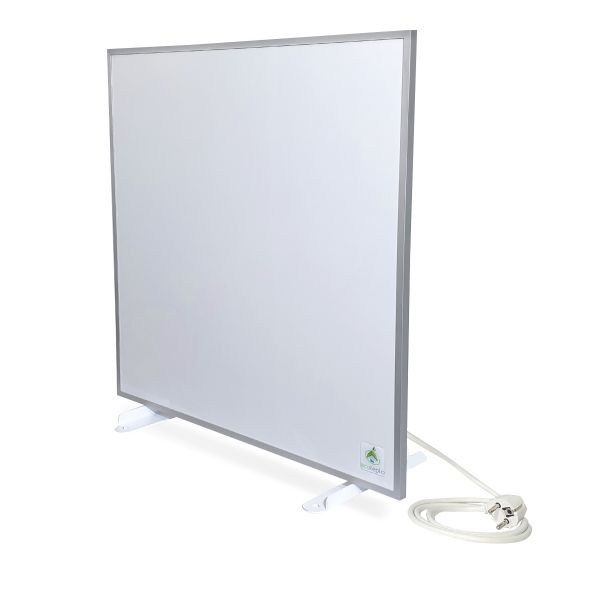
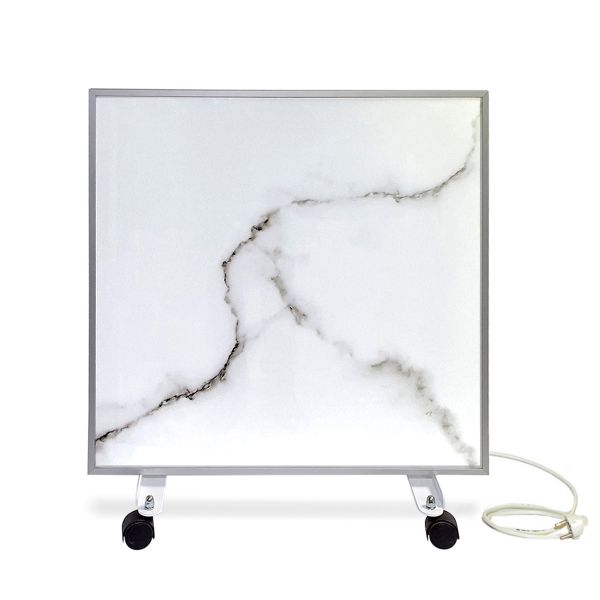
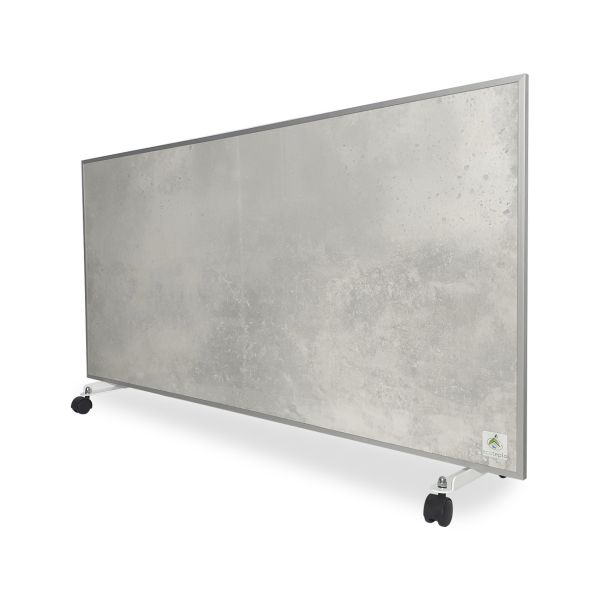
Installing a solid-fuel or gas boiler in an apartment is usually impossible or economically unreasonable due to lack of space, a flue, or permits. Underfloor heating works well under tile but is expensive to install and repair. So the main choice is between premium Terra ceramic panels and classic Air series models for rooms up to 10-20 m².
What experience shows: how much do you actually end up paying?
Based on our observations of ECOTEPLO customers, a 15-18 m² room with a 700-1000 W panel and a thermostat that keeps the temperature within a 1°C range consumes on average 3-5 kWh per day during the cold period when running 6-9 hours a day, not around the clock. That's significantly less than a simple convector without a regulator running continuously, which can draw twice as much for the same area. See the detailed calculation in our article on the cost of heating one square meter.
How do you know which heating is more economical for you?
- Calculate the room area and required power (roughly 80-100 W per m² with standard insulation).
- Consider whether you have access to mains gas and what tariffs apply in your region.
- Assess how stable your power supply is and whether you have a generator or UPS.
- Compare installation cost and payback period for your case — see more in our overview of firewood, diesel, and gas prices in 2026.
Common mistakes when choosing heating
The most common mistake is focusing only on installation price without accounting for 10-15 years of running costs. The second is buying power "with a margin" twice as large as calculated, which raises both the unit's price and peak consumption. The third is ignoring the system's compatibility with backup power, which in 2026 means the risk of being left without heat during an outage.
Sources and useful links
When calculating heat load, refer to building code DBN V.2.5-67:2013 (heating, ventilation, and air conditioning) — it sets the basic requirements for the thermal regime of premises in Ukraine. It's also useful to check the ECOTEPLO ceramic heaters section on the manufacturer's website, which lists the technical specifications of the models.
There's no universally "best" heating — there's an optimal solution for a specific house, budget, and region. But comparing options by the sum of criteria — cost, ease of installation, safety, and independence from external supplies — electric heating with ceramic panels wins in most typical scenarios for apartments and small houses in 2026.

-
Which heating is cheapest to install?
The cheapest option at the installation stage is electric heating with ceramic panels — no project, flue, or approval from the gas utility is needed, and installation takes just a few hours.
-
Which heating is most economical to run?
With correctly sized power and a thermostat, electric panels are often more economical than gas, especially when you heat only the rooms people are actually using rather than the whole apartment at once.
-
Can several types of heating be combined in one house?
Yes, a combined approach is common practice — for example, a solid-fuel boiler as the main source and electric panels as backup or supplementary heating for individual rooms.
-
How much does connecting gas heating from scratch cost?
The cost depends on the distance to the gas pipeline, project documentation, and approvals, and it often exceeds the cost of installing alternative electric heating several times over.
-
Is electric heating suitable for a house over 150 m²?
Yes, but you should calculate the system's total power in advance and check whether your wiring and meter can handle it, and consider a separate dedicated line.
-
What if power is frequently cut off in the house?
You should choose low-energy-consumption heaters per room and consider a UPS or generator of sufficient power to maintain at least basic heating.
-
Do you need a permit to install electric heating?
Household electric panels and convectors usually don't require a separate permit, unlike gas equipment, which requires project approval.
-
Which heating is safest for a child's room?
Ceramic panels with a low surface temperature and a thermostat are considered one of the safest options for children's rooms compared to open heating elements or stove heating.