Ceramic Panel vs. Ceramic Convector: A Direct Comparison

Quick answer: a ceramic panel is more compact, lighter, and reaches working temperature faster thanks to a thin, mostly radiant design, while a ceramic convector has a larger housing, a stronger convection circuit, and heats the whole room volume faster thanks to more active air circulation. Panels are usually chosen for nurseries, bedrooms, and small rooms; convectors for large living rooms and rooms with high ceilings.
Both appliances are built around a ceramic heating element, but differ in housing design and the balance between radiation and convection. This affects heating speed, heat distribution in the room, and the best use for each type. Let's make a direct comparison.
Design differences
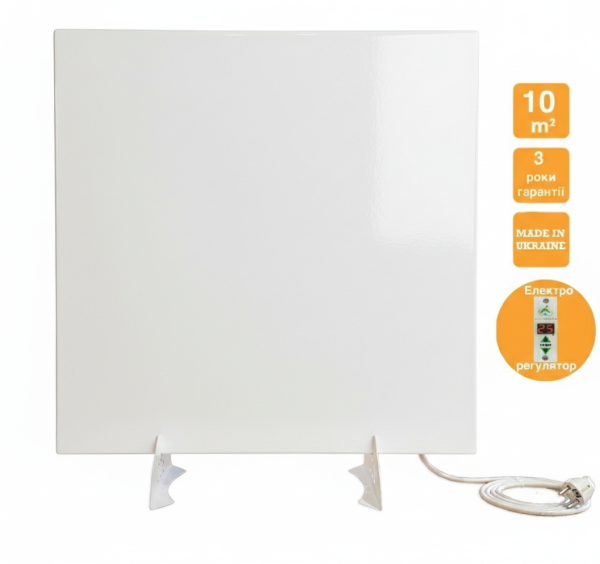
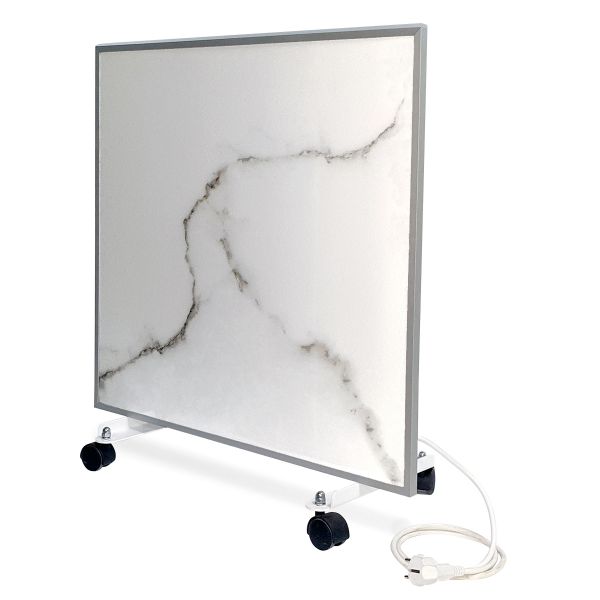
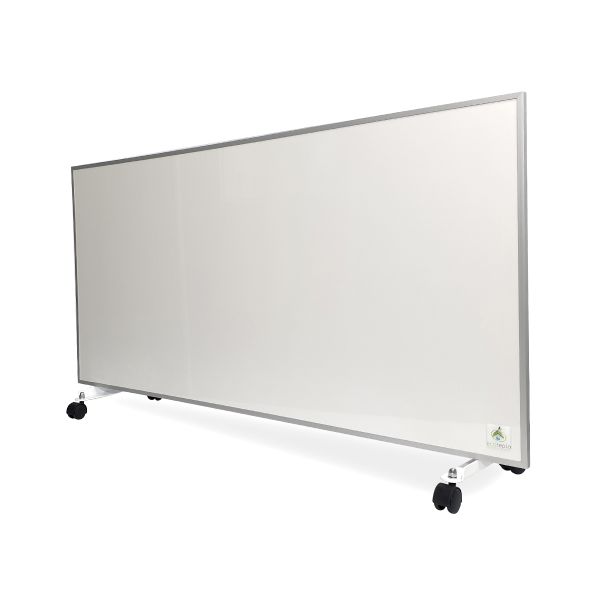
Ceramic panel
A thin, flat housing, usually a few centimeters thick, with minimal clearance for convection. The main heat-transfer mechanism is infrared radiation from the heated ceramic surface directly onto objects and people in the room. A panel quickly reaches working temperature and cools down just as quickly after being switched off.
Ceramic convector
A housing with a larger internal volume and special channels or fins to boost the natural airflow. Air passes through the heated element from below and exits the top of the housing already warm, providing more active circulation throughout the room. A convector's housing is usually thicker than a panel's.
Direct comparison by key criteria
| Criterion | Ceramic panel | Ceramic convector |
|---|---|---|
| Housing thickness | Minimal, 3-5 cm | Larger, 8-15 cm |
| Time to reach temperature | Very fast | Fast, slightly slower than a panel |
| Heating of far room corners | Moderate | Better thanks to more active convection |
| Weight and installation | Lighter, simpler installation | Somewhat heavier |
| Interior aesthetics | Minimalist, almost unnoticeable on the wall | More functional-looking |
| Optimal area | Up to 18-20 m² | From 15 m² and up, especially with high ceilings |
When to choose a ceramic panel
- A children's room or bedroom — a minimalist housing, lower weight, safer mounting. An additional argument: a convector draws in air from below, from the floor, along with dust, so in a bedroom or nursery, especially where a family member has allergies or asthma, a radiant panel is the more comfortable option;
- Small and medium rooms up to 18-20 m² with standard ceiling height;
- Spaces where aesthetics matter — the thin housing barely protrudes from the wall;
- Scenarios with frequent on/off switching — fast heat-up and fast cool-down suit spot, irregular use.
When to choose a ceramic convector
- A large open-plan living room or kitchen-studio;
- Rooms with high ceilings, where heating a larger volume of air matters;
- Spaces requiring stable operation throughout the day;
- Bathrooms and humid spaces, if the model has an appropriate protection rating.
Practical experience: how people choose between a panel and a convector
Based on usage observations for both appliance types in living spaces, the most common practice is a panel for rooms where a person spends limited time and a fast appliance response matters (a study, a nursery during the day), and a convector for rooms with prolonged, constant occupancy where even heating of the whole volume matters more (a living room in the evening, a kitchen-living room).
A second practical takeaway: in studio apartments and houses with open-plan layouts, owners often combine both types — a convector as the main heat source for the large space, and one or two panels in individual zones (a workspace, a window area) for additional spot comfort.
It's important to understand: the difference in heating efficiency between a quality panel and a quality convector of the same power is smaller than the construction description suggests. The main practical selection factor is the shape and area of the specific room, not an abstract "advantage" of one type over the other.
Power calculation for both types
The baseline guideline for both appliance types is 80-100 W per 1 m² of area at standard ceiling height. A detailed calculation methodology with correction factors is described in the article "How to Correctly Choose Heater Power for Room Area".
Choosing models by area
Conclusion
A ceramic panel and a ceramic convector aren't competing solutions — they're complementary. A panel wins on compactness, aesthetics, and response speed for small and medium rooms; a convector wins on even heating of large rooms with prolonged occupancy. The best choice depends on the specific room, not an abstract "advantage" of one type over the other.
Sources and useful links
- DBN V.2.5-67:2013 "Heating, Ventilation and Air Conditioning"
- Catalog of ECOTEPLO ceramic heaters

-
How does a ceramic panel differ from a ceramic convector?
A panel has a thinner housing and works mainly through radiation; a convector has a thicker housing with a more active airflow and heats the entire room volume faster.
-
What's better for a children's room: a panel or a convector?
A panel is usually the better fit — it's lighter, thinner, with a minimalist housing, which is safer for wall mounting in a nursery.
-
What's better for a large living room?
For large rooms with high ceilings or open-plan layouts, a convector is usually more effective thanks to more active air circulation throughout the volume.
-
Can a panel and a convector be combined in one house?
Yes, many owners use a convector as the main heat source for a large space and panels for spot heating of individual zones.
-
Which type heats up faster?
A ceramic panel is usually slightly faster due to its thinner housing and smaller volume of material that needs to be heated.
-
Do a panel and a convector need the same power?
The baseline guideline is the same — 80-100 W per 1 m² of area; the specific value depends on the model and the room's parameters.
-
Which looks more aesthetic in an interior?
A ceramic panel is usually thinner and less noticeable on the wall, while a convector has a more functional, more pronounced housing look.
-
Is a convector suitable for a bathroom?
Yes, provided the specific model has an appropriate moisture protection rating — some ceramic convectors are designed for installation in humid rooms.
-
Which is more economical: a panel or a convector?
The difference in energy consumption between a quality panel and a quality convector of the same power is minor — the main factor in efficiency is the thermostat and correctly matching power to area.
-
Can a convector be installed in a small room?
Technically possible, but for rooms up to 10-12 m², a compact panel is usually more practical due to its smaller housing size.